 Facebook
  Twitter
  Soundcloud
  Youtube
  Rss
Rss 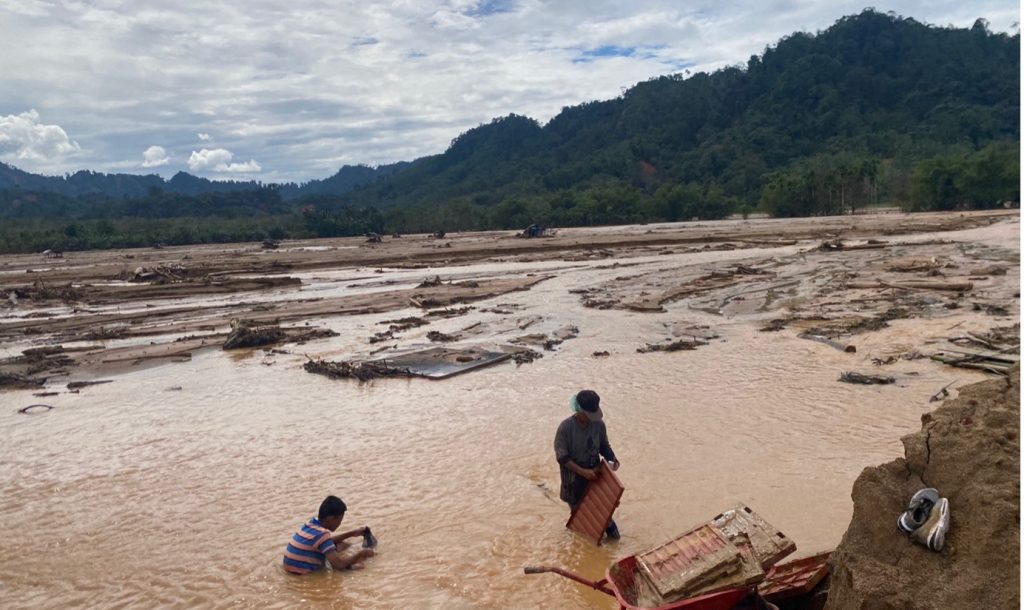




When the rain begins again, I am already on my way back home.
Earlier that afternoon, about a week after the flooding — once some areas again became accessible — my team and I had been delivering rice, bottled water, and basic necessities to flood survivors in Batang Toru subdistrict (kecamatan) in North Sumatra’s South Tapanuli regency. We did not reach the final village on our list. The access road had collapsed, swallowed by water and landslides, and the rain showed no sign of easing.
As of the latest estimates, at least 1,189 people have been killed, 141 remain missing, and 195,542 have been forced from their homes across Sumatra since the floods began on 26 November 2025. The scale of loss is staggering. But what is more unsettling is how little of this disaster can be described as sudden or unforeseeable. Nearly two months after the floods struck, Indonesia’s environment ministry moved to file a civil lawsuit against six companies accused of environmental damage in North Sumatra, seeking Rp4.84 trillion (US$286 million) in compensation. The defendants include PT North Sumatra Hydro Energy, PT Agincourt Resources, PT Toba Pulp Lestari, PT Perkebunan Nusantara, PT Multi Sibolga Timber, and PT Tri Bahtera Srikandi.
While significant on paper, the timing and scale of the lawsuit sit uneasily alongside the magnitude of the disaster. The provincial government in North Sumatra has estimated flood and landslide losses at Rp17.4 trillion, with post-disaster recovery needs projected to reach Rp69.47 trillion. The gap between ecological damage, fiscal response, and political accountability is telling. In the following days, the government revoked the forest and mining permits of 28 companies after a post–Cyclone Senyar audit found environmental violations that worsened flooding and landslides across Sumatra, including in the Batang Toru ecosystem.
The decision directly affected the Batang Toru hydropower project and the Martabe gold mine, yet the audit findings remain undisclosed and, as in previous enforcement efforts, no state institution or public official has been held accountable for approving and overseeing these projects in a known disaster-prone landscape. In other governance contexts, like the Philipinnes, major flood failures are often treated as state failures, with direct political consequences for officials.
For years, environmental groups have documented how Sumatra’s forests—once able to absorb, slow, and redistribute heavy rainfall—have been systematically degraded. Watersheds have been fragmented by mining concessions, industrial plantations, dams, and roads, stripping hillsides and riverbanks of the vegetation that once held soil in place. When Cyclone Senyar intensified rainfall across the region in late November 2025, the land simply could not cope. Rivers swelled faster, slopes failed more easily, and floods moved with a speed and force that turned villages into channels of debris.
What unfolded was not a freak event, but the predictable outcome of ecosystems pushed beyond their limits. Nowhere is this clearer than in the Tapanuli region, where the Batang Toru ecosystem—only about 150,000 hectares in size and known locally as Harangan Tapanuli across south, central, and north Tapanuli district—has been encircled by extractive projects. Environmental advocates point out that these projects have altered river hydrology, compacted soils, and accelerated erosion, transforming landscapes that once functioned as natural flood buffers into conduits for runoff. Satellite analyses and field investigations show extensive deforestation within concessions, including in areas officially designated for protection. When rain falls on such terrain, it no longer seeps slowly into the ground; it rushes downhill, carrying mud, rocks, and trees with it.
• • • • • •
Before heading home , I still have one final package to deliver: protein bars and boxed milk for my friend DC. DC comes from the same town as I do. Since the floods began, he has been volunteering with a search and rescue team, spending long days navigating the Garoga River. I meet him at their temporary post at the Batang Toru sub-district office, where he is stationed with another friend of ours, RH.
DC tells me he has cancelled a visit from two guests who were scheduled to come to Batang Toru forest to see the Tapanuli orangutan. He works as a tour operator, guiding visitors to what is often described as the rarest great ape in the world. For now, he says, that work does not matter. Becoming part of the SAR team is his priority, and bringing tourists into this landscape under current conditions would be irresponsible. The weather is too dangerous, the river too unpredictable.
The three of us (DC, RH, and I) share a past that binds us tightly to this forest. We have all worked at different times and under different banners, in conservation efforts for the Tapanuli orangutan and the Batang Toru ecosystem. Between us, it feels as though we have passed through nearly every conservation organisation operating here. Today, none of us are formally employed by any of them. Yet as we sit together, our conversation drifts easily and inevitably towards the joys and frustrations of working in conservation in Batang Toru ecosystem.
DC accepts the package I brought. He says the protein bars will be useful during long days on the river, when they have little time to stop while searching for bodies not yet recovered. RH orders hot milk tea to accompany our conversation. DC begins to describe the scale of destruction he has witnessed since the first day of the disaster.
As part of the SAR team, he has seen entire neighbourhoods erased. “Logs piled on top of sand up to waist height,” he says. “Thick layers of mud burying people’s rice fields. It’s impossible to imagine how they will make a living now.”
I picture the flood not as water alone, but as layers of debris carried from upstream; trees, sand, soil, sludge, each layer compounding the suffering below. The disaster itself is layered, just like its causes. I respond by telling him how aid has still not reached many of the most isolated communities, including the village we failed to reach today because the road had disappeared under water and landslides.
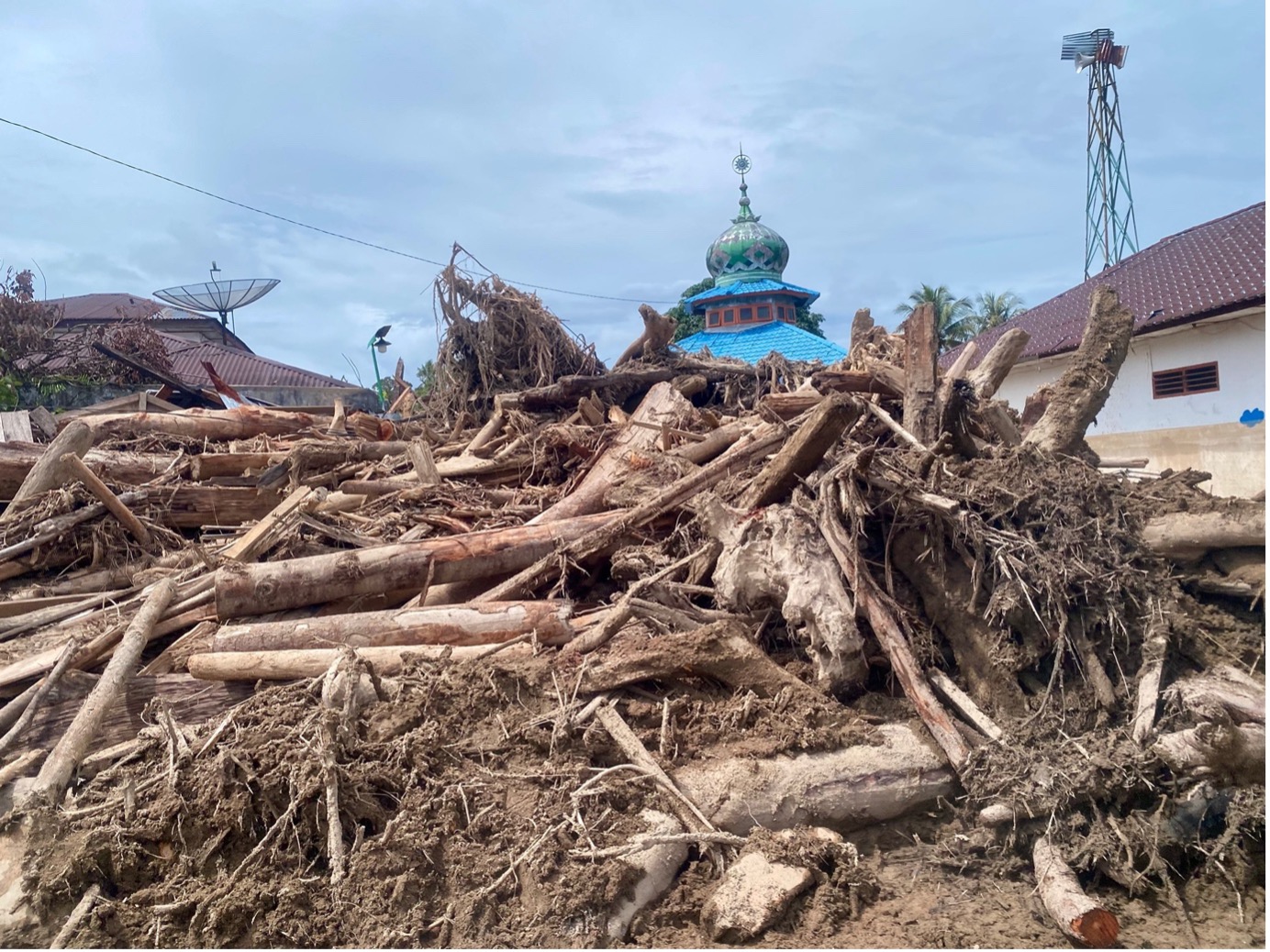
The flood arrived with layers of debris carried from upstream trees sand soil and sludge in Garoga Batang Toru Subdistrict, South Tapanuli. (Photo: Arrum Harahap)
“We’re the ones paying the cost,” DC says quietly.
All three of us agree. What is happening today in our home is borne by local communities. We are paying the price for extractive industries that continue to operate around the Batang Toru ecosystem, including: the Agincourt gold mine, PT North Sumatera Hydro Energy, PT Toba Pulp Lestari’s eucalyptus plantations, state and private oil palm estates, and other forms of forest encroachment. These extractive industries overlap with protected forests and upstream catchments. This is why many environmentalists reject the framing of the floods as a purely “natural” disaster. Climate change may have intensified the storm, but the scale of destruction reflects political and corporate choices made over decades—choices that prioritised short-term extraction over ecological stability.
What we are witnessing in the Batang Toru ecosystem is not an accident of nature, but the cumulative outcome of massive land-use change, unchecked extraction, and conservation practices that have failed to slow—let alone stop—this trajectory. These are the connections that often go unspoken in official statements and NGO briefings focused narrowly on the emergency response. Yet without acknowledging how governance failures, weakened environmental safeguards, and the expansion of extractive permits have reshaped Sumatra’s landscapes, the floods will continue to be treated as tragic anomalies rather than as symptoms of a deeper, ongoing crisis.
This is where the silence of key conservation NGOs begins to feel like complicity in this degradation of local ecosystems.
Since 2017, the Tapanuli region has attracted an unusually dense concentration of conservation organisations, both Indonesian and international. This attention followed the scientific identification of the Tapanuli orangutan as a distinct species—the rarest great ape in the world, found nowhere else on Earth. The Batang Toru forest is one of the last remaining tracts of intact tropical rainforest in northern Sumatra, supporting high biodiversity and functioning as a critical watershed. At the same time, it has become a focal point of conflict between large-scale development projects and conservation efforts. Donor funding and NGO presence followed, framing Batang Toru forest as both a conservation priority and a test case for how environmental protection would be negotiated in Indonesia’s development agenda.
Crucially, conservation organisations in Tapanuli now operate under so-called Cooperation Agreements, or Perjanjian Kerja Sama (PKS). The PKS system exists because NGOs in Indonesia do not have an automatic right to conduct conservation fieldwork in state forest areas; instead, they must secure formal cooperation agreements with government agencies. These agreements are typically issued by the Ministry of Forestry (often through the Directorate General of Natural Resources and Ecosystem Conservation/BKSDA), which defines what activities a particular NGO is permitted to undertake on the ground. Under Indonesian law, all NGOs with a permanent presence must have an approved agreement to do fieldwork tied to conservation with the environment ministry — without it, patrols, monitoring, community programming, and other conservation activities cannot legally proceed.
These arrangements give government agencies significant leverage over NGOs’ operations. They are discretionary, subject to periodic renewal, and can be ended ahead of schedule if authorities judge an organisation to have violated the scope of its agreement or operated outside the defined terms. A high-profile example occurred when the Ministry of Environment and Forestry (split into the current environment and forestry ministries in 2024) terminated its longstanding forest conservation partnership with WWF Indonesia years ahead of its scheduled expiry. The ministry cited alleged violations of the agreement and, in practice, ended much of WWF’s permitted fieldwork with that agency.
Because advocacy or public criticism can be interpreted as stepping outside a cooperation agreement’s boundaries, NGOs may become cautious about speaking out on controversial issues for fear of jeopardising their PKS (or other agreements) and losing their legal basis to work in the field. These agreements grant permission to work, but they also set boundaries. Organisations become cautious, fearful of losing their permits. Some NGOs, it should be noted, go further: they collaborate with, or accept funding from, the very extractive companies that are transforming the landscape.
As I write this, I check the social media accounts and public statements of conservation organisations working in the Batang Toru ecosystem in the weeks following the floods. Many operate as national representations or local partners of large international NGOs. Conservation International, for example, works through its Indonesian affiliate, Yayasan Konservasi Indonesia. The People Resources and Conservation Foundation (PRCF) operates as PRCF Indonesia. Other international organisations partner with local NGOs: the Switzerland-based PanEco Foundation supports conservation activities through the Sumatra Orangutan Conservation Programme under Yayasan Ekosistem Lestari; the UK-based Sumatran Orangutan Society works with the local organisations like Orangutan Information Centre and Tangguh Hutan Khatulistiwa., and many others.
Through these organisations, enormous sums of international donor funding have been channelled for years into protecting this ecosystem positioning the region as a global conservation priority. Yet in a quick review, I find no posts from organisations operating under PKS agreements, or their international partners, that publicly call out the extractive industries driving this crisis. There are no statements directly criticising the hydropower project, mining operations, or industrial forestry reshaping the watershed upstream. I found public critiques come from beyond the conservation establishment from WALHI (Friends of the Earth Indonesia) and Satya Bumi, which to my knowledge, are not bound by PKS arrangements; from Indigenous rights organisations such as AMAN and KSPPM; and, unexpectedly, from a church body, HKBP, which went further by not only naming these extractive industries but also calling on institutions to refuse donations from companies responsible for ecosystem destruction.
It is these actors, rather than conservation NGOs, who have publicly named and challenged the extractive industries shaping the Batang Toru ecosystem, through press releases and social media statements. Their statements are clear. The silence of conservation and orangutan protection organisations working on the ground here is just as clear. This is not a question of uncertainty over who is present or silent, but pointing to a broader pattern: a conservation architecture in which proximity to power and legal permissions shape what can be said publicly—and what remains unspoken.
“I can’t tell the difference anymore between government and non-government organisations”, I say quietly.
“These PKS agreements can create pressure on organisations,” RH adds. “At times, it feels like they are expected to say yes to everything, even when they shouldn’t.”
At what point does conservation begin to resemble a form of eco authoritarianism, one that aligns NGOs with state and corporate power, normalises coexistence with extractive industries, and gradually silences public criticism? When ecological conflict is depoliticised, what is left of conservation’s moral purpose?
I am reminded of the period between 2017 and 2019, when I was working with a conservation organisation involved in the scientific identification of the Tapanuli orangutan. Following the discovery, international attention intensified, particularly around the risks posed by a planned hydropower project to the species’ survival. This convergence of ecological significance and political controversy drew global attention. In 2018, scientists from around the world sent an open letter to then president Joko Widodo warning that continued infrastructure development threatened the survival of the Tapanuli orangutan and the integrity of the ecosystem.
In mid-2019, the programme coordinator at the time, Gabriella Fredriksson, was dismissed by the PanEco Foundation. A hydropower project advocate reportedly met with PanEco founder Regina Frey and referred to PanEco’s work in Indonesia, indicating that the memorandum regulating its partnership with the government could be withdrawn should the organisation or its staff persist in publicly criticising the dam. Her dismissal effectively ended a conservation career in Tapanuli that she had built since the early 2000s. In the period that followed, PanEco shifted towards a more cooperative model of engagement with the hydropower developer, framed as “multi-stakeholder cooperation”, which in practice aligned more closely with official narratives and narrowed the space for open ecological critique.
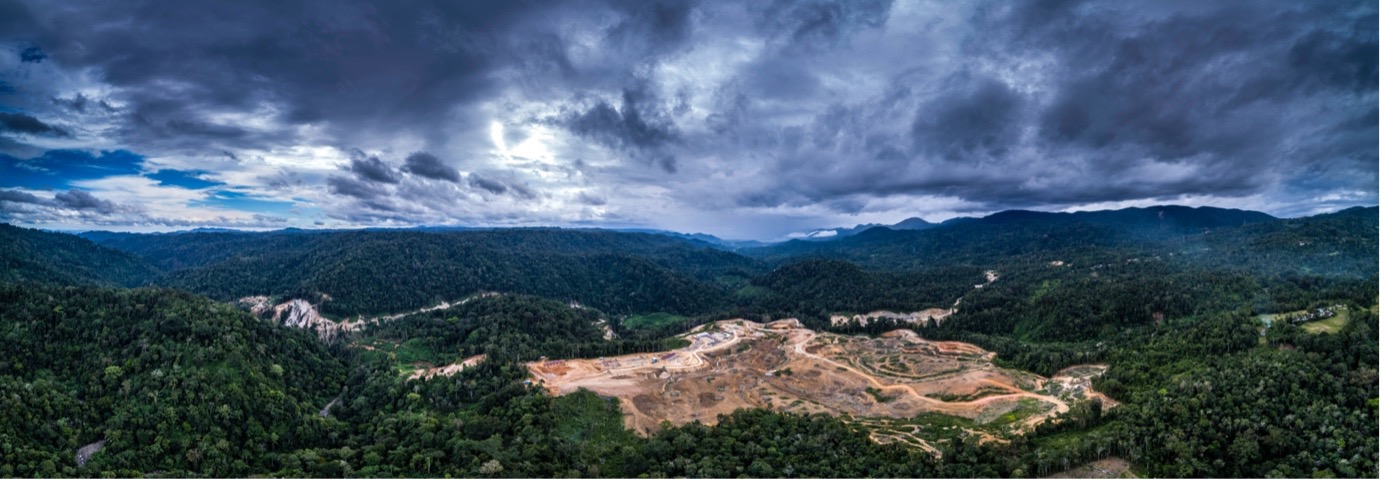
Batang Toru forest cleared by PT North Sumatra Hydro Energy (NSHE) for its hydropower project. (Photo: Nanang Sujana)
This episode can be read as part of a broader pattern often described as eco-authoritarianism: a governance environment in which conservation operates under increasingly restrictive political conditions, and where NGOs’ challenging state-aligned development agendas such as dams or mining projects may be viewed as institutional overreach. In Tapanuli, despite repeated scientific warnings about extinction risks, infrastructure development continued to be prioritised, while critical conservation voices found their room for dissent steadily reduced.
The constraints were not only abstract or ideological; they extended into everyday practice. In 2019, when twin Tapanuli orangutan infants were discovered in Batang Toru forest, the organisation I worked for shared the finding on Instagram. We were reprimanded by the government authority that issued our PKS permit. Such information, we were told, should not be made public without prior approval. It was a simple post about twin orangutan babies in the wild. Even that required permission.
More recently, environmental activist Chanee Kalaweit has spoken publicly about experiencing pressure and silencing by Indonesia’s forestry authorities for nearly nine years. His account echoes earlier cases of conservation actors who were constrained not by scientific uncertainty or ethical disagreement but by political power.
Crucially, the disciplining of conservation voices in Indonesia has not been limited to foreign nationals. Indonesian environmental defenders have borne the gravest risks where state-sanctioned development and conservation agendas converge. Five months after Fredriksson’s dismissal, Golfrid Siregar—a prominent environmental lawyer with WALHI—died under deeply contested circumstances while actively challenging a hydropower project in the Batang Toru ecosystem through litigation and public advocacy. Despite inconsistencies in official accounts and sustained calls from civil society for an independent investigation, authorities swiftly classified his death as a traffic accident.
For many Indonesian activists, Golfrid’s case became a stark warning: that questioning projects framed as “green development” can carry consequences that extend beyond professional sanction, revealing how conservation, when fused with authoritarian power, can shift from protection to intimidation. Civic space narrows where economic priorities dominate, and dissent is recast as procedural non-compliance rather than legitimate concern.
The restrictive power dynamics that affect the work of environmental NGOs in Tapanuli is not unique to the conservation world. It reflects a broader shift in the relationship between the Indonesian state and civil society over the past decade. Scholars of Indonesian politics have argued that the post-Reformasi alliance between reformist civil society and the state has fractured, leaving NGOs more marginal to policymaking and more vulnerable to co-optation. Across sectors, from environmental protection to human rights and anti-corruption, NGOs have increasingly been drawn into state-defined “partnerships” that prioritise implementation and technical assistance over political critique. Rather than acting as independent watchdogs, many organisations now depend on government approval for access and legitimacy, blurring the boundary between civil society and the state.
• • • • • •
“I choose to be a free human being,” DC says suddenly. “That’s why I posted the photo of the orangutan carcass I found in the Garoga River. I’m not tied to any organisation. I’m not bound by a PKS.”
A few days earlier, while searching the river for flood victims, DC received unclear information about a body on the opposite bank, possibly human, possibly not. He swam across the strong current of the Garoga. At first, he thought it might be a gibbon. When he looked closer, he realised it was a dead Tapanuli orangutan. He documented it. Days later, after he posted the images, he was contacted by conservation NGOs, government officials, and journalists.
“I posted what I saw,” he repeats. “That’s it.”
I understood what he meant. Had he still been tied to an NGO, posting an image of an orangutan killed in the flood would not have been an act of truth-telling, but a bureaucratic and emotionally costly ordeal, constrained by layers of approval and the ever-present risk of censorship.
The rain is finally letting up.
I look at my friends, three of us in our thirties, all from Tapanuli, all shaped by the forest, all carrying the same exhaustion. At this table, we let the day speak: for DC and RH, hours spent combing the river for bodies; for me, hours moving from door to door, delivering rice, water, and necessities.
“Would you work in conservation again in Batang Toru forest?” I ask.
“I want to go back to school first,” RH replies.
“For now, I just want to focus on finding the missing along the Garoga,” DC says. “After that, I want to organise trauma‑healing activities for the children in the villages.”
They turn the question to me.
I stay silent. I love conservation work; it has been my life. But I no longer know what kind of work is possible when it depends on constant compromise, when one must keep cherry-picking truths to remain acceptable to those in power.
The rain has stopped.
It is just after 6pm. I say goodbye and walk towards the main road to catch a shared minibus home, a journey of about an hour. I do not want to stay out too late; landslides are more likely after heavy rain. I’ve never looked at my hometown like this before, where even the simple act of going home carries the risk of death.