 Facebook
  Twitter
  Soundcloud
  Youtube
  Rss
Rss 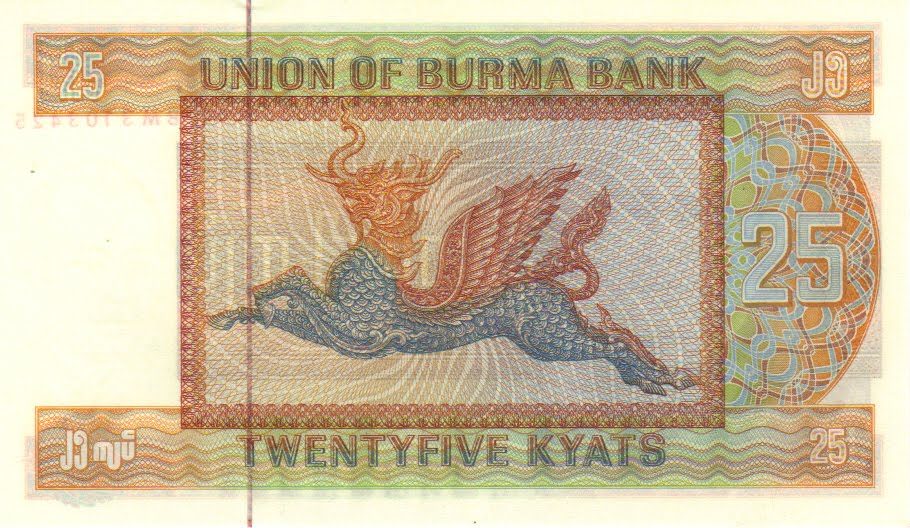




During the 1970s, anyone standing at the top of Sule Pagoda Road in Rangoon (now Yangon) on a weekday morning could witness a curious phenomenon. After the “Down” train from the southern city of Moulmein (now Mawlamyine) had pulled into nearby Central Railway Station, dozens of women and a smaller number of men would alight, laden down with a wide assortment of bundles and boxes. Some would head straight to the taxi stands, to hire one of the ubiquitous little Mazdas known as lei bein kar (literally “four wheels car”) waiting there. Others would shoulder their burdens and head off on foot, trudging westwards along Bogyoke Aung San Road.
This ritual occurred even though many passengers had already unloaded the bulk of their luggage by throwing it off the train at various points along the railway track, before it arrived at Central Station. By prior arrangement, their jetsam was collected by friends and collaborators who were lying in wait. In this way, those on the train reduced the chances of being detained by Customs Department officials wanting to enforce the wonderfully named 1963 Law to Protect the Construction of the Socialist Economy from Opposition. Other passengers would have already paid bribes to conductors and railway policemen to ensure a quick getaway when the train pulled into the station.
Whether they arrived by train or were carrying goods picked up elsewhere, the ultimate destination of all these travellers was the St John’s Bazaar, situated near the intersection of St John’s Road (now Min Yay Kyaw Zwa Road) and Prome (or Pyay) Road. There, about 500 shelters and makeshift wooden stalls marked the city’s main hmaung kho zei, (literally “shady market”). By convention, it was considered neutral ground, where traders could display illicit wares relatively free from official harassment. Most items on sale had been smuggled into Burma (now known as Myanmar) from Thailand. There was also contraband from other places, as well as goods “diverted” from official outlets, such as the People’s Cooperatives, where the shelves were more often than not left bare.
There were other “over the counter” black markets in population centres like Moulmein, which was dubbed the “royal capital of smugglers”. These included the Karnnar Zei (the Riverbank Bazaar) and the larger Mydah Kwin Zei (Playground Bazaar). The latter served as a major distribution point for contraband smuggled in from Thailand and Malaysia, and transhipped by train, truck and other means to Rangoon. There were similar markets in Mandalay to the north. One was in the main Zeigyo Bazaar (or Sweet Market) on 26th Street, and another was near Mandalay railway station, in the Chinese quarter (the Chinatown Bazaar, or Tayok Tan Zei). Both specialised in consumer goods smuggled into Burma from China, ranging from pharmaceuticals and kitchenware to blankets and bicycles.
General Ne Win’s socialist regime had banned all private imports in 1963, the year after it seized power in a military coup. In 1964, Burma’s entire export trade was nationalised. Banks, and businesses employing more than 20 people, were also taken over by the government. Under the so-called Burmese Way to Socialism, all commerce was conducted through 22 state corporations. The sale of consumer goods was initially placed in the hands of the People’s Store Corporation, but for various reasons it proved a complete failure. By 1974, a nationwide system of cooperative stores had been introduced. However, due partly to the tight controls exercised over imports, there were few commodities to distribute. With typical Burmese gallows humour, the “Concos”, or Consumers’ Cooperatives, became widely known as Konkhos (“stealers of goods”).
Faced with this situation, Burma’s citizens became increasingly reliant on the unofficial, or black, market, popularly known as “Trade Corporation 23”.
Despite the high prices (up to ten times those charged by government stores), the black market quickly became an essential component of the national economy. Indeed, it was estimated by the World Bank that during the 1970s the value of the unofficial market in Burma was at least equal to, and probably greater than, that of the official economy. Some analysts said it was worth around US$300 million annually. The economist Mya Maung has claimed that, during the entire Ne Win period (1962–1988), the black market constituted two thirds of all Burma’s domestic and external trade. Such statistics can always be questioned, but it is undeniable that without the black market the country would have ground to a halt. As one experienced Burma-watcher put it, it was “possibly the world’s most efficient [black market] and certainly one of its most necessary”.
According to the Burmese scholar Kyaw Yin Hlaing, “By the end of the 1970s, several hundred thousand people were believed to be engaged in various forms of hmaung kho activity for their living and more than 90% of the population had to rely on the hmaung kho sector for about 80% of their basic needs”. Not only did it provide popular consumer goods like cosmetics, cassette tapes and Coca Cola, but it also became the main source of essential items such as medicines, tools and automotive machine parts. A lively underground trade developed in scarce items in high demand, like vitamin pills and contraceptives. Monosodium glutamate from Thailand, widely known by its brand name as Ajinomoto, was especially sought after. Through black market dealers, it was even possible to order high value foreign goods like stereo players and motorcycles.
The local currency, known as the kyat (pronounced “chat”), could only be used in Burma, and was worthless outside it. (There is an apocryphal story that a wealthy expatriate in Singapore papered the walls of his toilet with old Burmese banknotes). As Ne Win’s doctrinaire socialist policies were progressively implemented, and the country’s economy went into free fall, so did the value of the kyat. However, the official exchange rate set by the Central Bank was fixed at around 6.5 kyat to the US dollar. A gap immediately opened up between the official rate and the free market rate. During the 1970s, the latter was around 20 to 25 kyat to the US dollar, or four times the official exchange rate. By the time Ne Win was ousted in 1988 it had reached more than 40 kyat to the dollar.
Using this rate was technically illegal, but the practice was widespread. Burma’s monetary system evolved in different ways over time, but there were always loopholes and gaps that could be exploited by the locals and the small community of resident foreigners, almost all of whom were diplomats and United Nations personnel. There was also a trickle of tourists who flew into Burma from Thailand and India for short visits. After the 1962 military coup, visitor visas were only issued for 24 hours, extended to 72 hours in 1969 and seven days in 1971. This was to keep out “alien cultural influences”. Longer stays were not permitted until a new military regime took over in 1988.
Most travellers to Burma during this period knew that foreign liquor and cigarettes could be sold for a handsome profit on the black market. Doing so was openly recommended by Lonely Planet’s Burma: a travel survival kit and other popular guides. Tourists and backpackers invariably arrived at Rangoon’s Mingaladon airport (the only authorised entry point) with the permitted duty-free bottle of Johnnie Walker whisky and a carton of Marlboro or State Express 555 cigarettes. These items were easily sold to touts at hostels like the YMCA for up to three times their purchase price, paid in “real” kyat. This was enough to cover a visitor’s living expenses while in-country. Train and plane tickets still had to be paid in dollars and declared on an official currency declaration form.
For anyone interested, there were other “informal” sources of local currency.
Such was the shortage of foreign goods under the Burma Socialist Programme Party that visitors were frequently asked to sell their denim jeans, cameras and wristwatches. Even their ballpoint pens and sunglasses could fetch good prices. One trick commonly employed by those permitted to have foreign exchange was to go to the state-run diplomatic store near Sule Pagoda and buy (at the official exchange rate) items such as Export Duya cigarettes and foreign whisky. They could then be sold to local traders for a considerable profit, paid in kyat at the black-market rate. Limits were later introduced, but during the 1970s there did not seem to be any restrictions on the number or nature of the goods that foreigners could trade in this fashion. The regime was too hungry for the foreign exchange, and payments of “tea money” usually kept the local officials sweet.
Throughout this period, it was common practice for resident diplomats to pay their domestic servants, and other local service providers like auto mechanics and tennis coaches, with bottles of whisky and cartons of cigarettes. At duty free prices, these items were cheap for foreigners to buy, and they could be sold by recipients on the black market for sums much greater than the usual fee they demanded for services rendered. Both parties came away winners. Also, kyat obtained at the unofficial rate, either brought in from Thailand or acquired locally, could be used to pay for luxury items such as handmade teak furniture, art works and other souvenirs. In those far-off days, there were precious few restaurants or nightclubs that catered to foreigners.
In this regard, the members of the US embassy and their families enjoyed a distinct advantage. During the 1960s, the US had built up large reserves of the local currency, after the Ne Win government insisted on paying in kyat for US assistance provided under Public Law 480 (PL480, or “Food for Peace”, formally known as the Agricultural Trade Development and Assistance Act of 1954). With Burmese government agreement, the US used these funds to pay the embassy’s local currency expenses, including the local component of the salaries paid to embassy staff. The exchange rate used for these transactions was never widely advertised but it was believed to be much more favourable than the official rate.
Other governments exploited Burma’s currency woes in other ways. For example, one Western embassy in Rangoon had a standing order with its counterpart in Bangkok to purchase kyat at the black-market rate. (Moneychangers in Thailand seemed to have an inexhaustible supply of soiled Burmese banknotes, probably acquired on the border). The funds were sent to Rangoon in the diplomatic bag and were used, with home government approval, to pay for all local expenses. The embassy staff in Rangoon were paid the local component of their salaries at the same favourable rate. This arrangement was not only seen as good business by the home government, but also as fair compensation to staff members for the hardships they were asked to endure while living in Burma.
There were other ways that resident foreigners could benefit from the regime’s ideologically driven socialist policies and poor economic management.
The import of private motor vehicles being forbidden without rare government approval, any cars purchased by diplomats and sold on their departure from Burma acquired special value. Under one well-established scheme, a local broker (doubtless tipped off by the relevant officials) would approach a diplomat importing a duty-free car and offer to buy it for a very good price, at the unofficial rate. The cost would be paid in regular instalments of local currency over the course of his/her posting. The diplomat concerned could use this regular flow of kyat to pay all local expenses. Just before the diplomat’s departure from Burma, the last instalment was paid by the broker, and the car keys handed over. Such an arrangement pleased both parties and, technically at least, was quite legal.
To take a more blatant case, one Southeast Asian ambassador’s wife reportedly imported large quantities of batik cloth, which was then very popular among wealthier and more fashionable Burmese women. Rolls of batik were brought into Burma under diplomatic privilege, and were not declared, so no import dues were paid. It was then discreetly sold to local tailors and entrepreneurs for rubies, jade and other precious stones. Periodically, these gemstones would be taken to Hong Kong for sale to carefully selected Chinese jewellers. The hard currency realised from those sales was used to buy more batik, and so the cycle began again. Along the way, the ambassador’s wife was reputed to have skimmed off enough profit to build a couple of mansions back home.
In another scheme, a Western diplomat brought small gold bars in from Bangkok, which he used to pay members of the local Chinese community for pieces of antique porcelain. Following in the footsteps of the British colonial civil servant Maurice Collis, this diplomat reportedly accumulated quite a collection of early Chinese ceramics over the course of his posting. Many Chinese in Burma were kyat rich but hard currency poor, and such deals permitted them to smuggle their now transportable wealth out of the country. Then there was the European ambassador who, on reaching the end of his posting to Rangoon, insisted that the shipping container for his personal effects be constructed from export quality teak so that, on his return home, he could sell it for a sizeable sum.
• • • • • • • •
Within a few years of the 1962 coup, Burma’s black market was so ubiquitous and essential for the conduct of normal social and economic life, that the regime tended to view it with a Nelsonian eye, allowing it to grow and coexist alongside the official system. In individual cases, bribes and other inducements usually persuaded the relevant authorities to look the other way. However, from time-to-time crackdowns occurred. In 1976, for example, there was a wave of arrests against black marketeers, many of whom ended up in “Moscow”, as the Burmese called the country’s prison system. After a raid on the St John’s market by military police officers, the hmoung kho zei was forced to transfer most of its operations to the Number 10 Quarter Market in the suburb of South Okkalapa, and later to the Mingalah Zei (Auspicious Market) near Kandawgyi Lake.
The Ne Win regime’s ire was directed mostly at the wealthy private traders who were involved in large scale businesses that challenged or competed with the government’s critical industries and state monopolies, such as rice production, timber extraction and the sale of precious stones, including jade. It seemed less troubled by the illegal importation of consumer goods, particularly those that could not be produced in Burma, like modern electrical equipment, or which satisfied a critical need, such as medical supplies. Indeed, it has been suggested that Ne Win saw the black market as an effective safety valve, and as a way of keeping a potentially restless population happy, despite the manifest failure of his idiosyncratic socialist system to satisfy their basic requirements.
This led some observers to accuse the Ne Win regime of being inconsistent in its attitude to law breakers, but toleration of the black market was a practical response to the harsh economic realities. It also recognised that many high-ranking military officers and their wives were deeply involved in shady businesses. Some malefactors were protected by diplomatic immunity. That said, the black market posed real problems for the regime. Not only did it fan inflation (estimated at around 32% in 1975), demoralise the population and corrupt state employees, but it helped sustain ethnic armed organisations based around Burma’s rugged borders. Millions in kyat (and other currencies) were collected by Karen, Mon and Shan insurgent groups in tolls on smugglers passing through their territories each year. Taxing this “ant army” (as the Thai authorities called them) was a critical source of income for elements opposed to the Ne Win regime.
This was said to be one reason why Ne Win launched three currency demonetisations designed, it was claimed, to weaken greedy “black money holders”. In 1964, all 50 kyat and 100 kyat banknotes were suddenly proclaimed “illegal tender” and made invalid. In 1985, 20 kyat, 50 kyat and 100 kyat notes were demonetised without warning, catching everyone unawares. Some exchanges were allowed, but eventually only 25% of the face value was reimbursed. In 1987, 25 kyat, 35 kyat and 75 kyat notes (only introduced in 1985 and 1986) were demonetised, rendering 70-80% of the country’s currency invalid overnight, without any compensation. Needless to say, it was not only the black marketeers who suffered from these measures. Many ordinary Burmese had their savings wiped out, encouraging them to put greater faith in gold and gemstones. This in turn boosted the unofficial exchange rate.
Occasionally, action was taken against foreigners for flouting the regulations. Unwary tourists trying to change their dollars into kyat on the street, as recommended by some travel guides, were sometimes arrested by government agents and deported. (More were swindled by touts who paid them in out-dated banknotes). In the case of the batik smuggling operation mentioned above, the Burmese authorities (who knew all about it) eventually ran out of patience and “invited” the ambassador concerned to end his posting early. At least one Western diplomat was declared persona non grata for smuggling in high denomination US banknotes to buy antiques from local dealers. In that particular case, the dealers were imprisoned for selling off the nation’s precious cultural heritage.
To the dismay of Rangoon’s foreign community, in 1976 a regulation was introduced which required all private vehicles imported under diplomatic privilege to be offered to the government at the end of the relevant officer’s posting. To add insult to injury, the car had to be sold at its original purchase price, less 10% per year depreciation, all calculated at the official exchange rate. No exceptions would be allowed. The new rules spelt the end of a highly profitable scheme which had made life very comfortable for many diplomatic and UN personnel stationed in Burma. According to the local gossip, the broker who masterminded these car sales was arrested for currency violations.
In some respects, Burma during the 1970s was a pretty freewheeling place. What was remarkable about this period, however, was the fact that the unofficial economy and two-tiered system of currency exchange rates persevered for so long, and was so widely (albeit informally) accepted, by both the government and private citizens alike. Even now, despite the introduction of all sorts of currency controls by later administrations, and the adoption of more sensible rates, elements of the old system survive. Since the 2021 military coup, for example, the condition of the economy has become so dire that corruption is rife and private traders are once again smuggling in the basic necessities of life. The domestic black market is experiencing a resurgence, although Burmese entrepreneurs are now competing with transnational criminal gangs.
More to the point, perhaps, trust in the kyat has fallen so low that everyone, Burmese and foreigners alike, are reluctant to deal in the national currency. The official exchange rate is constantly changing but is now close to 2,100 kyat per US dollar, while the unofficial rate can be as high as 4,100 kyat per dollar. No doubt people visiting or living in Myanmar will find new ways of taking advantage of the situation.