Facebook
  Twitter
  Soundcloud
  Youtube
  Rss
Rss 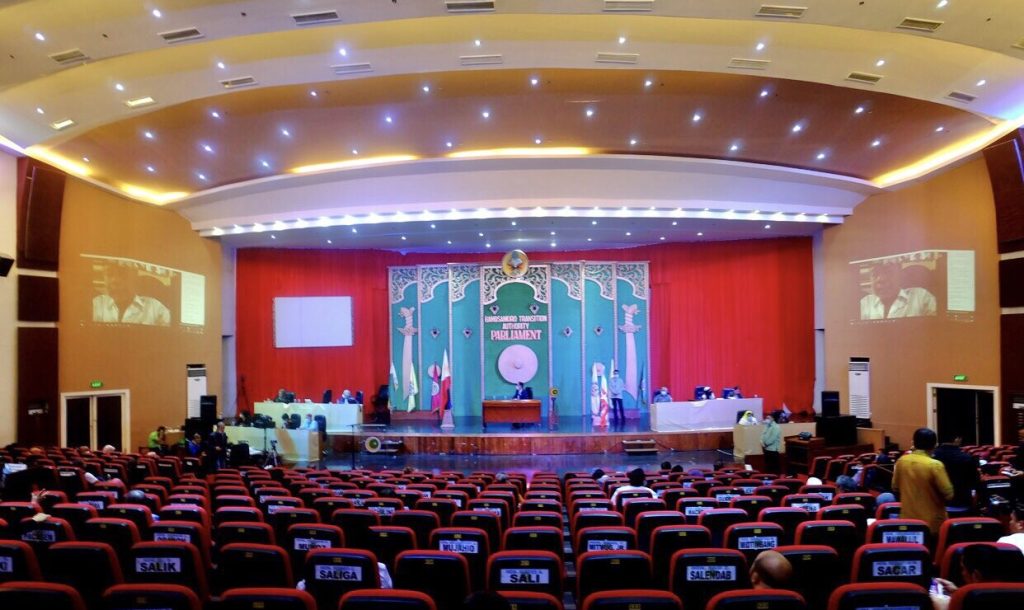




If all had gone to plan, analysis of how the autonomy process in the Bangsamoro Autonomous Region in Muslim Mindanao (BARMM) is travelling would now be focusing on the results of a parliamentary election that would have been the political capstone of the painstaking process of peace-building embodied in the 2018 Bangsamoro Organic Law (BOL). The BOL gave effect to the 2014 Comprehensive Agreement on the Bangsamoro (CAB) signed between Manila and the Moro Islamic Liberation Front (MILF). The CAB sought to institutionalise the long-standing aspirations of the Bangsamoro people for meaningful self-governance, fiscal autonomy, and cultural recognition within the Philippine state.
Building upon the provisions of the CAB, the BOL established the BARMM as a new political entity, replacing the former Autonomous Region in Muslim Mindanao (ARMM). The BARMM was granted expanded powers over its internal affairs, including shared authority over natural resources, taxation, and revenue generation, alongside the administration of justice through a dual system that integrates Shari’ah and civil law. At its core, the BOL promised not only structural reform but also a transformation from decades of armed struggle to participatory, democratic governance.
Central to this vision is the Bangsamoro Parliament, the region’s unicameral legislative body, designed to embody a parliamentary form of government, the first of its kind in the Philippines. Unlike the presidential system at the national level, the Bangsamoro Parliament was structured to promote inclusivity and coalition-building among diverse sectors: the revolutionary forces of the MILF, traditional leaders, settler communities, women and youths, Indigenous peoples, and other sector of the society. The Parliament was meant to symbolise not only the end of war but also the beginning of participatory politics in a region long marked by marginalisation and militarisation.
In theory, this parliamentary setup was to serve as a laboratory for peace and governance reform in a historically conflict-torn society. Through its mixed-member electoral system, which combines district-based and proportional party representation, the parliament was expected to deliver policies grounded in local realities, addressing the root causes of poverty, injustice, and underdevelopment that had long fuelled the Bangsamoro struggle
The BARMM was intended to demonstrate the Philippines’ capacity to transform rebellion into governance, insurgents into parliamentarians, and peace agreements into democratic institutions. But six years since its inauguration in 2019, the region remains stuck in transition. The first Bangsamoro parliamentary election, initially scheduled for May 2022, was moved to May 2025, then to October 2025, and has once more been extended to March 2026 amid legal disputes, leadership reshuffles, and political bargaining in Manila.
For many Moro leaders and ordinary citizens alike, this sequence of delays feels less like an orderly transition and more like a drawn-out political drama, where every act is scripted in the capital and every episode adds new twists and turns. What was supposed to be a straightforward democratic milestone has become a cliffhanger: when will the election actually take place, and under what terms?
The question now is not only about dates and deadlines. It concerns the credibility of the peace process itself, the durability of autonomy, and whether the Bangsamoro will ever shift from “transitional government” to self-rule.
Political drama, Manila-style
In the Philippines, politics rarely follows the script of sober institutionalism. It is theatre, messy, improvised, and often at the expense of democratic norms. The Bangsamoro transition has not escaped this national habit.
In 2025 alone, the headlines have read like episodes in a never-ending drama. Former President Rodrigo Duterte, once the country’s most feared strongman, found himself in the custody of The Hague, wanted by the International Criminal Court (ICC) for crimes against humanity linked to his bloody “war on drugs.” The Supreme Court struck down the long wait impeachment of Vice President Sara Duterte, declaring it unconstitutional and exposing the naked factional battles within Congress. At the same time, a Senate inquiry into flood control projects revealed that lawmakers from both the House and Senate allegedly pocketed 25% of the total cost in kickbacks, siphoning off billions of pesos meant for climate resilience.
These episodes are not outliers; they are part of the rhythm of Philippine governance, where scandals, impeachments, and court interventions define political time. Against this backdrop, the repeated delays of the Bangsamoro parliamentary elections appear less like anomalies and more like symptoms of the same pathology. When elite interests collide with institutional timelines, institutions give way.
Delaying the first Bangsamoro parliamentary election fit neatly into Manila’s broader playbook: when institutions clash with elite interests, deadlines bend. Duterte’s Congress postponed the 2022 election, and Marcos Jr.’s administration shifted the calendar again. It is the same pattern that has defined Philippine democracy for decades: elections are sacred only until they are inconvenient.
The peace process in suspense
The unravelling of the Bangsamoro parliamentary election cannot be viewed in isolation; it is inextricably linked to growing strains in the peace process. The journey began with the 2012 Framework Agreement on the Bangsamoro signed between then Noynoy Aquino administration and the MILF (FAB), a precursor to 2014’s Comprehensive Agreement. The FAB laid out a vision of shared sovereignty, institutional transition, and normalisation, with the BOL eventually providing the constitutional backbone for BARMM, envisioning the devolution and political participation in the region.
At each stage, the state and the MILF made solemn commitments: to decommission fighters, devolve meaningful powers, deliver socioeconomic support, and hold regular elections at the prescribed times. But in practice, every promise has been delayed, deferred, or suspended. In 2025, tensions boiled over. The MILF formally suspended decommissioning of its remaining 14,000 combatants and 2,450 weapons, citing what it called the Philippine government’s failure to substantially comply with normalisation obligations, including socioeconomic packages and other parallel commitments such as addressing Transitional Justice and Reconciliation, disbandment of private armed groups, and the gradual withdrawal of military forces and reconfiguration of security presence in MILF communities.
In one public resolution signed by MILF Chair Murad Ebrahim and Secretary Muhammad Ameen, the group explicitly deferred further decommissioning until the state fulfilled its obligations under the Annex on Normalisation of the CAB, which outlines the gradual disarmament of MILF forces and the transformation of former combatants and their communities into peaceful, civilian lives. The Office of the Presidential Adviser on Peace, Reconciliation, and Unity (OPAPRU) publicly expressed dismay, reiterating that the national government has already committed billions of funding to programs, including cash assistance, health services, training, and infrastructure development.
On the other hand, according to the statements from the MILF’s peace panel, chaired by the group’s longtime chief negotiator Mohagher Iqbal, the decommissioning process must proceed in “parallel and commensurate” fashion with other deliverables under the CAB’s normalisation track. However, those other provisions, disbandment of private armed groups, transitional justice, infrastructure, and livelihood support, are lagging badly, they argue.
Meanwhile, independent observers have noted that out of 26,145 combatants already decommissioned, only 1,286 (about 5 %) were from the six MILF camps recognised in the peace process. The rest were from scattered areas, complicating oversight and integration.
The endless transitions of ARMM and BARMM
The history of delay in Bangsamoro is not new to BARMM. Its roots can be traced to the former ARMM, established via an act of Congress in 1989. Out of thirteen provinces and nine cities that participated in a plebiscite held that year on joining ARMM, only Lanao del Sur (excluding Marawi City), Maguindanao, Sulu, and Tawi-Tawi joined, revealing from the start how fragile the ARMM-based autonomy project was.
President Cory Aquino proclaimed the ARMM a landmark in autonomy, but from its first regional election in 1990 ARMM was already being defined by transitionary politics rather than stability. Each subsequent election cycle became an arena for delay, compromise, or the manoeuvring of traditional politicians.

Imee Marcos claims the family legacy
Leveraging the Marcos Sr legacy to advance her political standing—even at her brother’s expense?
These repeated deferments eroded public trust. Misuari’s administration failed to deliver the dividends of peace, alienating many of his MNLF comrades and fragmenting the organisation into splinter groups. By the time Misuari was defeated by fellow MNLF leader Dr. Parouk Hussin in the November 2001 ARMM elections, shortly after RA 9054 expanded ARMM’s territory to include Basilan and Marawi City, the project of autonomy was already widely derided as a failed experiment.
This pattern of extended transitions, postponed elections, and unmet expectations has carried over into BARMM. While BARMM was supposed to break from ARMM’s deficiencies, with stronger fiscal powers, a parliamentary system, and MILF leadership at the helm, the cycle of postponement has repeated. Just as the ARMM elections were delayed in the name of stability, the BARMM’s parliamentary polls have been repeatedly postponed.
What was supposed to be a bridge to full autonomy has again become an extended waiting room. The lesson from ARMM is sobering: when “transition” becomes indefinite, autonomy risks being hollowed out. The very mechanism meant to stabilise peace turns into a perpetual excuse for delay.
FAB, CAB, BOL: from hope to betrayal
The 2012 FAB raised hopes of a transition from conflict to autonomy, whereas 2014’s CAB fleshed out institutional structures, sequencing normalization, and political transition. The BOL gave them legal force. And the BARMM’s inauguration in 2019 made it a reality.
But in 2025, the foundations of those agreements are being tested visibly and painfully. Instead of a resilient autonomous polity, what we see is the reassertion of Manila’s prerogatives, internal tensions over leadership, and a palpable sense that some commitments have been sacrificed on the altar of political expedience. A flashpoint: in March 2025, President Marcos unilaterally replaced Ahod “Al Haj Murad” Ebrahim, the MILF-nominated interim chief minister of BARMM, with Abdulraof “Sammy Gambar” Macacua.
This move sparked sharp objections within the MILF leadership. Mohagher Iqbal accused the government of violating key provisions of the CAB and the BOL, particularly the expectation that the Bangsamoro Transition Authority (BTA) be MILF-led, with the MILF holding a majority (i.e., 41 of the 80 seats) in the interim parliament. He pointed out that six MILF nominees were not even in the list submitted to the president.
Under Article XVI, Section 2 of the BOL, the MILF is supposed to lead the interim parliament during the transition. Iqbal argued that by deviating from the MILF’s recommended nominee for chief minister, the government had breached the spirit, and perhaps the letter, of the negotiated framework. Critics say that this is more than a personnel change: it represents a disrespect for the so-called 41–39 formula, which stipulates that MILF-nominated members should form the majority in transition arrangements. The logic was that giving the MILF control during the transition period was both symbolic and practical, recognising that the insurgent party must not just be a partner on paper but a governing actor with legitimacy. Replacing Murad months before an election, and against the MILF’s preferences, appears to be a power grab that undermines the peace process.
Observers were quick to note the optics: the replacement happened just months before the scheduled (but already delayed) parliamentary election in October 2025. It appeared to centralise authority again, raising fears that the national government was reasserting itself in the final stages of the transition. Many political analysts speculated that President Marcos’s decision was not merely administrative but strategic. With the midterm elections concluded, Manila was seen as positioning itself for the 2028 national polls. Some observers believed that the Marcos administration viewed Chief Minister Sammy Gambar as more politically pliant compared to Murad Ebrahim and Mohagher Iqbal, particularly in advancing alliances for the President’s prospective senatorial slate. Yet this calculus seems to have backfired—during the 2025 midterms, the Bangsamoro electorate largely supported candidates aligned with the Duterte bloc, underscoring the region’s political independence and resistance to centralised control.
Sulu’s exit: a province apart
One of the most jarring flips in the Bangsamoro story is the judicial exclusion of Sulu province from the BARMM. In the 2019 Bangsamoro plebiscite, the province voted against joining BARMM, yet under the plebiscite rules, the entire ARMM (including Sulu) was counted as one unit, meaning Sulu was carried into BARMM despite its rejection. For years, Sulu’s dissent was glossed over. However, in September 2024, the Supreme Court issued a landmark ruling, declaring Sulu’s inclusion in the BARMM to be unconstitutional.
On November 26, 2024, the Supreme Court declared its September decision final and executory, rejecting motions for reconsideration from BARMM and other parties. This means legally, Sulu is no longer part of BARMM. As a result, seven parliamentary seats originally allocated to Sulu are now invalid, creating a representation vacuum and complicating plans for the first Bangsamoro parliamentary elections.
Due to this exclusion, redistricting for the Bangsamoro parliament enacted via local laws were challenged in court and partially struck down. The removal of Sulu from the electoral map rendered those laws ineffective.
So, what does Sulu’s exclusion mean in reality?
First, the removal of Sulu, one of the historic Moro provinces, cracks the narrative of the Moro as a united Bangsa (nation). The exclusion raises questions about the inclusiveness of autonomy. Second, no matter how sophisticated a law is, it cannot override democratic will. The Supreme Court reaffirmed that a province that voted no to inclusion in BARMM cannot be subsumed through legislative or constitutional sleights. Third, with Sulu out, electoral districts for the Bangsamoro parliament will need to be reconfigured, and seat allocations will have to be renegotiated. Finally, the exclusion undermines ambitions of political coalitions that counted on Sulu. For instance, the Bangsamoro Grand Coalition (BGC) had chosen then-Sulu Governor Sakur Tan as a candidate for Chief Minister; Sulu’s removal significantly undercut that pathway. The governance boundary changes raise questions about service delivery, budgets, and bureaucratic realignment in areas formerly under the supervision of the BARMM.
The Supreme Court steps in
With the September Supreme Court decisions freezing the Bangsamoro redistricting effort, the electoral machinery was effectively immobilised. COMELEC announced the suspension of all election preparations in BARMM, announcing that holding the election on 13 October as scheduled had become legally and factually impossible.
This judicial intervention, depending on one’s vantage, is either a defence of constitutional order or a coup against Bangsamoro autonomy. On one hand, the Court insists it is upholding the integrity of elections, enforcing rules about when and how redistricting can occur, even in an autonomous region. On the other hand, Moro and BARMM leaders view it as the national judiciary asserting veto power over the region’s first election, effectively deciding its fate in Manila rather than through the votes of the people.
Imee Marcos claims the family legacy
Leveraging the Marcos Sr legacy to advance her political standing—even at her brother’s expense?
Such a turn raises deep questions: if the judiciary has become the arbiter of Bangsamoro’s future rather than its voters, what does that say about the very notion of autonomy? And if elections can be derailed through legal injunctions, what assurances do BARMM’s people have that their voices can prevail over institutional or political power plays?
So, what’s next?
The collapse of the October 2025 election leaves BARMM in limbo. Four paths are possible:
First, Congress and the president may again extend the BTA’s mandate, pushing elections to 2026 or 2028. But each extension deepens cynicism. Second, some have floated electing only a portion of parliament while redistricting issues are resolved. This risks illegitimacy. Third, others argue that the Bangsamoro project needs a deeper rethink, centring on the questions of whether a parliamentary model is even workable, whether Sulu should be permanently excluded, and whether Manila can resist meddling. Lastly, the gravest risk is disillusionment. MILF has already suspended military decommissioning. Communities may see elections as a false promise. Hardliners could argue that the state cannot be trusted.
What is certain is that the Bangsamoro project has lost momentum. The longer it takes to hold credible elections, the weaker its legitimacy will become.
The delay of Bangsamoro’s first parliamentary election is not just a scheduling issue: it is a crisis of autonomy, legitimacy, and peace. The Philippine state has once again demonstrated that it struggles to fulfill its commitments to the Bangsamoro people. The MILF, once insurgents, now risk being seen as a new political actor clinging to transitional power. The judiciary, meanwhile, has become the ultimate referee of a process meant to be democratic. Bangsamoro’s election delay tells us that autonomy in the Philippines remains precarious. Peace agreements are signed, organic laws are passed, transitions are proclaimed, but when the test of democracy comes, deadlines collapse. The lesson is stark: autonomy without elections is autonomy without legitimacy. For now, the Bangsamoro remains stuck in a state of transition. Whether it can move beyond delay and deliver on its promise will determine not only the fate of Bangsamoro people but also the credibility of Philippine democracy itself.