Facebook
  Twitter
  Soundcloud
  Youtube
  Rss
Rss 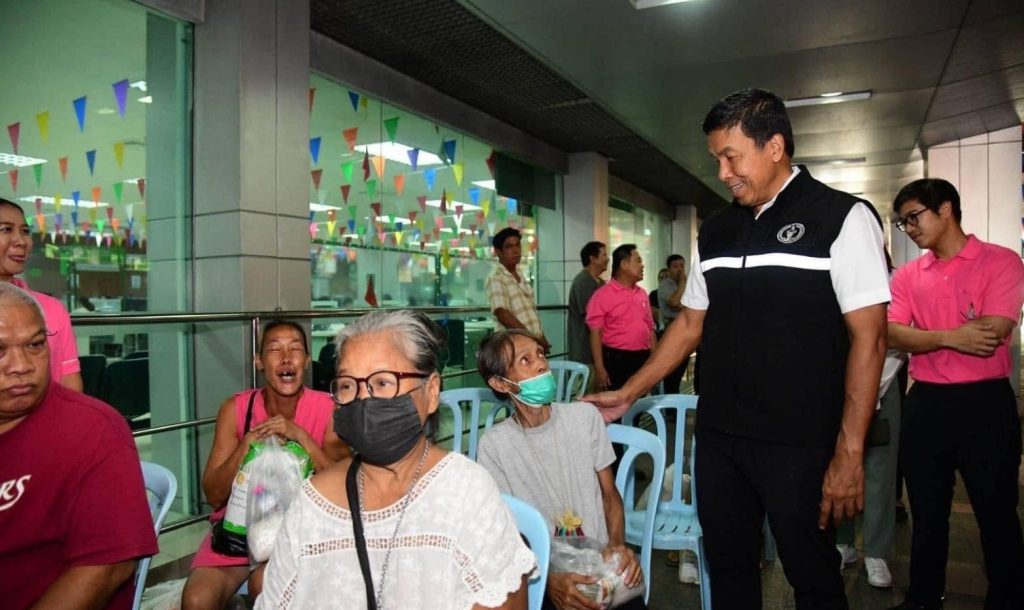




On 28 June approximately 4.5 million voters in Bangkok will choose a new governor and Bangkok Metropolitan Council. On the surface the outcome looks predictable: polls consistently show incumbent Governor Chadchart Sittipunt leading his nearest rival by more than fifty percentage points, and analysts have described the atmosphere as quieter than the charged contest of 2022.
Yet the gubernatorial election remains one of Thailand’s most closely watched political contests. Bangkok has long been a central arena for national political conflict, including escalating confrontations between 2006 and 2020. The office of Bangkok governor was caught in this dynamic. From 2014 to 2022 the position was filled by appointment rather than election., as a direct consequence of the 2014 military coup, which suspended local democratic processes for nearly nine years.
The 2026 election arrives at a significant moment. In the February 2026 general election, a coalition of conservative and royalist parties won a commanding majority in parliament, weakening the Prachachon (People’s) Party and reshaping the national landscape in ways that have a bearing on the governor race. Yet when we look at the 2026 election as a window into the relationship between Bangkok citizens and their political institutions, we see two plausible interpretations of the same evidence: does the apparent elevation of metropolitan issues over national ones reflect a deliberate choice by voters, or structural barriers to local candidates’ campaigning on the basis of national-level divides?
Bangkok’s electoral history: from battlefield to ballot box
Bangkok’s governor is directly elected because the city is a special administrative area under the Bangkok Metropolitan Administration Act B.E. 2528 (1985). This status grants the local executive greater autonomy to manage complex local infrastructure and governance than other Thai cities. As part of this unique arrangement, Bangkok voters also elect members of the Bangkok Metropolitan Council (BMC) to oversee local legislation and budgeting.
This unique political environment in Bangkok (and Pattaya) has fostered a highly engaged electorate—and a volatile electoral history. Voters in the capital have used national general elections to repeatedly abandon established parties for new political forces, ranging from the Prachakorn Thai Party’s success in 1979 to the transformative rise of Thai Rak Thai in 2001. Although the Democrat Party later consolidated its position by winning 23 of 33 constituency seats in 2011, this dominance proved fragile. By the March 2019 general election, the first held since the coup of 2014, the Democrats failed to secure a single seat, as the capital’s political landscape split between the pro-military Palang Pracharat Party and the progressive Future Forward Party.
The 2022 governor election produced a different signal. Running without formal party affiliation, Chadchart Sittipunt won a landslide victory, drawing support across the political spectrum to win the election with 52% of the vote in a five-cornered contest. His nearest rivals from the Democrat and Move Forward parties each winning less than 10 per cent of the vote. The result suggested Bangkok voters were distinguishing between their national-level preferences and their expectations of local government, a fact underlined in the 2023 general election, when the Move Forward Party won 32 of Bangkok’s 33 constituency seats.
Bangkok governor elections do not align with national political trends. The results from the 2022 governor race and the 2023 general election suggest that voters in the capital can make layered choices. They support ideological transformation at the national level, but still prioritise managerial competence in local government.
What voters want in 2026: the depoliticisation of city politics
Survey data from the weeks before the 2026 election consistently points in one direction: Bangkok voters are prioritising administrative competence over political affiliation. A NIDA Poll conducted between 2 and 4 June found that 67.3% of respondents would vote for Chadchart, with this preference holding across all six district groupings of the city. Two May polls similarly found majorities favouring an independent candidate, at 61.8% and 64.96%.
The issues voters identify as most important reinforce this picture. Data collected by Wisesight between May and June 2026 found the five most discussed topics on social media to be corruption and transparency, PM2.5 pollution, pavements and cleanliness, the cost of living, and flooding and drainage. A KPI Poll found the quality most valued in Bangkok Metropolitan Council members was knowledge of local problems, chosen by 26.4%, against just 3.4% who wanted a member affiliated with a trustworthy party.
Pitch Pongsawat defines the Chadchart era as a period of “depoliticisation”, a process where the role of the governor is reframed as a managerial position rather than a political one. A key example of this approach is his signature initiative, the Traffy Fondue complaint platform, which has received 1.3 million reports and successfully resolved approximately one million of them. Critics argue this focus on incremental repair has limited larger ambitions, pointing to the slow rollout of his flagship “15-minute-walkable park” program. Survey evidence, however, suggests most Bangkok voters respond more readily to visible improvements in daily life than to promises of large-scale transformation.
Moreover, many young voters view Chadchart’s governance as representing a pragmatic shift toward efficiency, preferring tangible improvements in city services over the polarising ideological battles that define national politics. Although some activists criticise the governor’s apolitical stance for avoiding systemic issues, many young voters have adopted a strategic outlook. They effectively distinguish between their long-term desire for structural national change and their immediate need for functional local administration. Supporting an independent governor thus represents a sophisticated balancing act, which allows the youth to maintain ideological pressure on national institutions while pragmatically securing their quality of life at the city level.
This does not mean the election is without competition, though most challengers compete within the same managerial frame. Prachachon’s candidate Chaiwat Sathawornwichit campaigns on urban resilience and anti-corruption, while the Democrats’ Ancha Burapachirasri focuses on what Chadchart has left undone. Proposals from smaller candidates include AI-controlled traffic signals, a one-to-three-day complaint resolution guarantee, and AI-driven management of flooding, traffic, and pollution. Across this range, the contest is less a clash of visions than a competition over who can deliver more effectively within shared priorities.
The national implications: two perspectives
The patterns described above carry implications for Thai politics beyond the capital, but those implications are open to at least two different interpretations. The first perspective holds that Bangkok voters have developed a capacity for differentiated political judgement, in that they choose candidates based on the demands of each electoral arena rather than a single ideological lens.
The high turnout intention recorded in the May 2026 KPI Poll—85.9%—suggests that this pragmatism goes hand-in-hand with active civic participation. Polled between June 4–7 Bangkok voters prioritise candidates capable of effectively addressing city problems, and a majority (64%) support major infrastructure projects if they are necessary and offer real solutions. If Bangkok voters can consistently separate local governance from national ideology, it would represent a significant shift in how Thai citizens engage with their political institutions.
The second perspective is equally plausible. What looks like a deliberate choice to make pragmatic differentiation on the basis of local policy issues may reflect a structural constraint on the ability of parties to campaign on national-level divides. Despite Prachachon’s strong 2023 performance and near-sweep of Bangkok constituency seats, the party has struggled to translate that support into a credible gubernatorial candidacy. Analysts cite Chaiwat’s late nomination, his limited name recognition beyond the party base, and the difficulty of converting ideological enthusiasm into votes for a non-partisan office. The preference for an independent governor may therefore indicate that the opposition lacks strong candidates, leaving voters with few alternatives.
These two perspectives are not mutually exclusive. Napaporn Jatusripitak has shown that the old Bangkok-versus-countryside binary in Thai politics has given way to more granular patterns. KPI Poll data for 2026 points to similar complexity within Bangkok itself. Asked what they most want from a council member, outer-district respondents prioritise local knowledge over coordination skills (30.7% to 22.9%). Middle-district respondents rank local knowledge first (29.3%) but integrity and transparency second (22.2%). Inner-district respondents give almost equal weight to “coordination”, “local knowledge”, and “integrity”, at 21.7%, 21.1%, and 20.3% respectively (. This variation suggests Bangkok is not a single political unit, and any national-level conclusion from this election must account for the city’s internal diversity.
The concurrent Bangkok Metropolitan Council (BMC) election further complicates the political narrative. According to NIDA’s June 2026 poll, voters prefer independent council candidates (29.1%) over the Prachachon Party (26.5%) and the Democrats (11.5%). This preference suggests that voters seek to balance an independent executive with a robust opposition, thereby constructing a specific model of local governance. However, this structure carries risks. Without a reliable voting bloc, an independent governor lacks the legislative support to secure budgets, as evidenced by the council’s previous decision to block funding for air-purifying projects at local schools.
Conclusion
Bangkok’s 2026 gubernatorial election will not resolve the larger questions hanging over Thai politics. The conservative coalition’s commanding majority, the constrained position of the opposition, and the unfinished process of constitutional reform will all remain in place after the votes are counted. But the election will produce evidence worth reading carefully.
Three indicators deserve close attention. First, the scale of Chadchart’s winning margin: a result significantly below his 2022 total would suggest that the depoliticisation of city affairs has limits, while a comparable or higher total would strengthen the argument that Bangkok voters have genuinely separated local from national political calculations. Second, the composition of the Bangkok Metropolitan Council: a strong performance by Prachachon alongside an independent governor would indicate a deliberate desire for political balance rather than a retreat from politics. Third, voter turnout: the Bangkok Metropolitan Administration has set a target of over 70%, an increase from 60.73% in 2022. Reaching this goal would reflect active civic engagement in a campaign that has otherwise generated limited public excitement.
Editors reflect on the site's role and thank those who had a hand in bringing it to this special milestone
20 years of New Mandala
Ultimately, this balance remains fragile, as the stability of the separation between local and national politics depends on the national government. If the conservative–royalist coalition implements policies that directly impact the capital, this may challenge the “wall” between local governance and national ideology. Any resulting conflict could force voters to abandon their pragmatic approach, finally clarifying whether Bangkok’s current political climate represents a lasting transformation or a temporary adaptation to national constraints.