 Facebook
  Twitter
  Soundcloud
  Youtube
  Rss
Rss 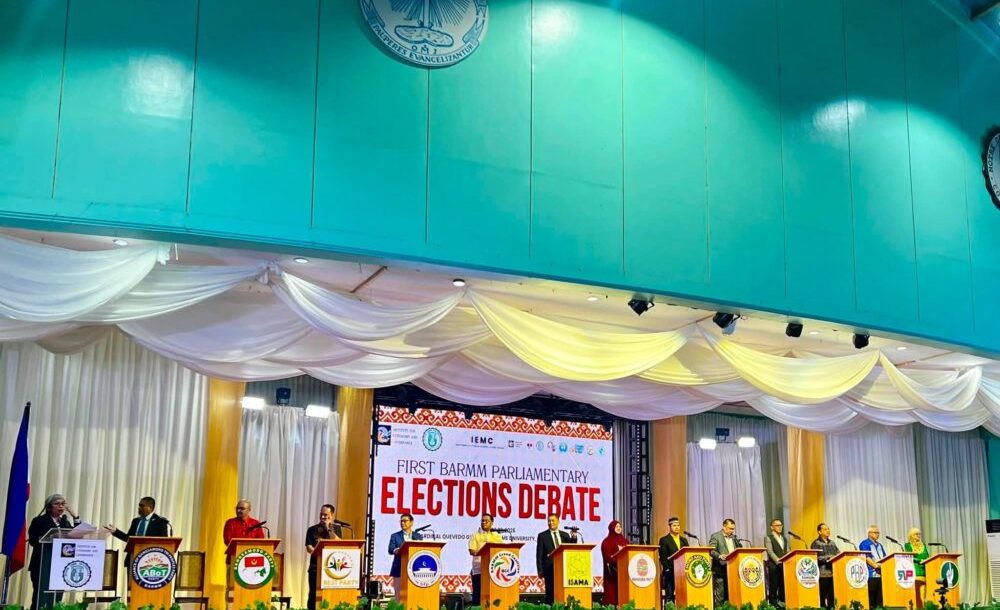




Last October, I argued at New Mandala that the repeated postponement of the Bangsamoro Autonomous Region in Muslim Mindanao (BARMM)’s inaugural parliamentary elections had put the autonomy process into a waiting room. My conclusion was simple: autonomy without elections risked having the powers of autonomy exercised without legitimacy.
The promise of an elected government was built into the Bangsamoro peace settlement from the start. The 2012 Framework Agreement on the Bangsamoro (FAB) called for a parliamentary government for the BARMM and an electoral system that would encourage “genuinely principled political parties.” The 2018 Bangsamoro Organic Law (BOL) later created the Bangsamoro Transition Authority (BTA) as an interim government, to be dissolved upon the appointment of a Chief Minister by the first elected Bangsamoro Parliament. The Moro Islamic Liberation Front (MILF)-led transition was meant to prepare the institutions of self-government, but voters were meant to decide who would govern after it.
Getting from that promise to a ballot took much longer than expected. The BOL originally scheduled the first regular election for 2022. In October 2021 the Philippine Congress passed amendments to the BOL moving the election to May 2025 after the COVID-19 period disrupted the transition and national leaders argued that the BTA needed more time to complete key institutions. Then, in September 2024, the Supreme Court ruled that Sulu was not part of BARMM because the province had rejected the BOL in a 2019 plebiscite. By removing Sulu’s seven proposed single-member district (SMD) seats, the decision forced the BTA to redraw the planned BARMM parliamentary map, and Congress responded in February 2025 with legislation moving the election to 13 October 2025.
The October 2025 vote also failed to materialise. The Supreme Court later struck down the BTA’s 2025 redistricting law developed in response to the 2024 decision on Sulu’s status, leaving BARMM without a valid map for its 32 SMD seats. The Court ordered a new redistricting law and an election by the end of March 2026, although the BTA’s replacement map was only approved in January 2026. By then, the Commission on Elections (COMELEC) could no longer complete the preparations required under the new boundaries, including compliance with time limits governing precinct changes before an election. Congress passed a new “reset” law (Republic Act No. 12317) in March 2026 that set 14 September 2026 as the new election date and 30 October as the date on which the first elected members would assume office.
The ballot itself is unfamiliar by Philippine standards. The 80-member Bangsamoro Parliament combines three routes to representation. 40 seats are filled through party-list proportional representation (PR) with a single regionwide electoral district. This is a “closed-list” system: regional political parties submit ranked lists of nominees, so voters choose a party rather than an individual nominee for this part of the ballot. 32 seats come from single-member parliamentary districts elected via first-past-the-post. The remaining eight are reserved for sectoral representation, with two seats each for non-Moro Indigenous Peoples (NMIP) and settler communities, and one each for women, youth, traditional leaders, and the Ulama (religious leaders). Under 2026 amendments to the Bangsamoro Electoral Code, the six non-NMIP sectoral seats are filled by the general electorate through direct plurality voting, while the two NMIP representatives follow a separate sectoral process administered under COMELEC rules.
For years, observers have wondered what kind of politics the new parliamentary system would actually produce. Philippine elections are often organised around personalities, local machines and family networks. Bangsamoro has its own powerful clans and traditional politicians, as well as revolutionary organisations with deep social roots. Reformers hoped that a parliamentary system and a strong regional party vote could push competition toward programs and collective platforms, while sceptics worried that old networks would simply acquire new party labels. Political scientist Julio Teehankee has described the Bangsamoro Electoral Code as an effort at post-conflict “institutional re-engineering” aimed at encouraging party-based competition.
The first BARMM Parliamentary Elections Debate, held on 27 August inside a gymnasium at Notre Dame University in Cotabato City, offered an unusually public way to see whether that experiment was beginning to work. The organisers structured the discussion—which featured representatives of all 13 regional parliamentary political parties—around economic and human development, peace and security, and good governance. Their questions were designed to push the parties beyond slogans and toward actual choices on budgets, land, security, and institutions.
During the debate, the moderator described the election as an opportunity to shift political discourse from personalities to platforms and parties; the COMELEC representative made essentially the same point. Voters were being asked to compare ideas, programs, principles and qualifications, rather than simply familiar names. That language closely echoes the original peace settlement, which explicitly linked the parliamentary system to the formation of principled political parties.
That sounds straightforward until it is set against the region’s institutional history. Under the former Autonomous Region in Muslim Mindanao (ARMM) system, voters directly elected a regional governor and vice governor, while the Regional Legislative Assembly was composed mainly of members elected from three-member legislative districts. Political parties were present, although the regional executive did not depend on the support of a parliamentary majority, and there was no regionwide PR component as in the BARMM system. In the BARMM, the Chief Minister must command parliamentary support, and regional parties can turn a share of the regionwide party vote into parliamentary seats.
The Bangsamoro Electoral Code adds rules intended to make those parties more than temporary campaign labels: as mentioned above, the 40 party seats use a “closed-list” system: each party files a ranked list of 40 nominees, and seats won by the party are filled in that order. Following 2026 amendments, a party needs at least 2.5% of valid party-list votes to qualify for seat allocation, and at least 30% of its nominees must be women. Regional parties must also maintain chapters in every BARMM province and city and in a majority of municipalities in each province. A legislator elected under the party list who changes their political affiliation during their term forfeits their seat.
The 32 district seats work differently: each is a single-member constituency decided by plurality vote. These rules cannot erase clan influence or personal networks. They do, however, create incentives for parties to organise regionally, recruit a team of candidates and defend a collective program.
The debate was the clearest public rehearsal so far of these institutional changes. The organisers had provided the substantive questions in advance. Each party received three minutes for its main answer, followed by a one-minute interpellation from another party and a one-minute rejoinder. Crucially, the moderator reminded viewers that the answers were being offered as the parties’ positions and commitments, rather than merely the speakers’ personal opinions. That made the event more than a television performance: it created a public record of what these parties say they would do with power.
The encouraging part is that many of the answers contained more policy than the usual language of peace, development and good governance. I coded the 39 main responses across the three rounds. 28 contained at least one identifiable operational mechanism—a law, an institution, an administrative procedure, a monitoring system, a budget rule or another concrete means—through which the proposal might be carried out.
Consider the debate over how regional resources should be distributed. The United Bangsamoro Justice Party (UBJP) did not simply promise fairness. Its representative proposed an allocation framework using criteria such as population, poverty, historical development gaps, disaster vulnerability, geographic isolation, and the actual cost of delivering services. The answer also proposed public disclosure and geographic monitoring of investments. Local coverage after the debate captured the same emphasis on matching resources to the different needs of BARMM’s provinces and communities. The proposal was reported locally as a call for needs-based distribution.
Other answers followed a similar pattern. Partido Bangon Bangsamoro (PBB) proposed a public madrasah (Islamic school) system alongside stronger support and standardisation for private and traditional madaris. Progresibong Bangsamoro Party (PBP) argued for stronger barangay-level primary health care and later added facility and workforce mapping, referral networks, and regional-local coordination. On budget implementation, the same party proposed real-time publication of spending and outcomes, performance dashboards, geo-tagging and earlier procurement. BEST Party proposed an inter-agency mechanism for the region’s tangled land problems. Bangsamoro Federalist Party (BFP) argued that poverty programs would remain inadequate if they failed to reach isolated communities, a position it linked to better targeting of regional resources. That anti-poverty argument was also highlighted in local post-debate reporting.
None of this proves that the policies will work, nor does it mean that the Bangsamoro party system has suddenly become fully programmatic. The questions varied from party to party, so it would be misleading to rank the parties by how many policies they mentioned. Some answers were detailed in one area and conspicuously thin in another.
The important point is that the first regionwide party debate was more modest, showing that political competition in Bangsamoro is beginning to acquire visible policy content. The parliamentary model will fail to change political behaviour if regional parties become little more than new labels for old electoral machines. It has a better chance if voters can associate parties with recognisable choices about education, health, land, security, budgeting and institutional reform. The debate gave the public an early, imperfect version of that politics.
The most revealing moments of the debate often came after the prepared speeches ended. The interpellation format gave rival parties a minute to identify weaknesses in an answer. That is a very short time, and some interpellations amounted to little more than agreement or counter-speech. Across the 39 exchanges I examined, however, 28 rejoinders added clear substantive information that had not been explicit in the initial answer; another six added partial clarification.
A health proposal from one speaker, for example, sounded sensible when it promised stronger barangay services. The interpellator then asked a more mundane question: how will the government know whether health workers are actually present when patients need them? The rejoinder became more concrete, adding facility and workforce mapping, as well as monitoring and referral arrangements.
A discussion on normalisation faced another kind of challenge: who should finance the unfinished socioeconomic commitments of the peace process? In the Bangsamoro peace process, normalisation refers to the broader transition from armed conflict to peaceful civilian life under the 2014 Comprehensive Agreement on the Bangsamoro (CAB). It includes the decommissioning of MILF combatants and weapons, transitional security arrangements, socioeconomic assistance for former combatants and conflict-affected communities, the transformation of MILF camps, transitional justice and reconciliation, and other measures intended to establish human security and sustain the transition to peace.
The rejoinder clarified that BARMM could complement national commitments while national and regional deliverables should be tracked separately. Elsewhere, parties were pressed on whether their proposals were legally within the Bangsamoro Parliament’s power, whether programs could reach islands and minority communities, and whether claims about transparency or oversight matched their own record in the transition government.
Political competition therefore appears to be useful in giving opponents incentives to expose what a rival’s prepared answer neglected. Sometimes the challenge produced a better explanation; sometimes it revealed that the original proposal had no convincing second layer. Either way, voters learned more.
Former peace adviser Teresita “Ging” Deles, who attended the debate, later praised the issue-centred and respectful character of the discourse while also warning that the election cannot be treated as the completion of the peace process. Her point about unfinished normalisation is an important reminder that a civil parliamentary contest is itself an achievement, yet it sits alongside unresolved commitments.
The debate also exposed a harder truth about Bangsamoro autonomy: winning control of Parliament does not mean gaining control over every problem Parliament is expected to solve. I compared debate speakers’ core proposals with the legal and institutional architecture of BARMM. 18 of the 39 proposals were clearly within regional authority. 17 were plausible as regional policies but depended on national institutions, intergovernmental mechanisms, courts, constitutional bodies or conditions outside Parliament’s unilateral control. Four combined a supportable regional idea with a legally contested or uncertain component.
The pattern appears across the three debate themes. BARMM can legislate for and invest in its energy sector, but any acquisition of parts of Mindanao’s Agus hydropower complex, as was floated during the debate, would be subject to statutory conditions and coordination with national energy institutions. The region can help address loose firearms and private armed groups, but firearms regulation, the police, the military and formal normalisation mechanisms remain tied to national authority and peace-process bodies. BARMM can create land programs and conduct land administration, yet title disputes, cadastral functions and judicial decisions often require national agencies or courts. Electoral reform must coexist with COMELEC’s constitutional authority. Shari’ah institutions can be supported regionally, while the courts remain under the national judiciary.
The Bangsamoro Government possesses powers that the ARMM never enjoyed, but it exercises many of them within a wider Philippine constitutional order. The quality of the next parliament will therefore depend not only on whether parties know what they want to do, but also on whether they understand at what level of government they can actually do it.
That distinction is important for the election campaigning now underway. A party can make a concrete promise and still misread its legal authority. Another can correctly identify that a program requires Manila, local governments, or a constitutional agency and design its strategy around that dependence. For voters, the second kind of answer may be less compelling, but it is often closer to what governing autonomy actually requires.
Leveraging the Marcos Sr legacy to advance her political standing—even at her brother’s expense?
Imee Marcos claims the family legacy
That is why the first debate deserves attention beyond its novelty. It offered an early glimpse of the kind of politics the parliamentary system was supposed to create. Parties publicly associated with programs, rivals forced to interrogate those programs, and voters invited to judge ideas as well as personalities. It also showed the distance still to travel. Policy detail was uneven, financing was often missing, and some commitments rested on institutions the next parliament will not control. And the peace process itself remains unfinished, with normalisation, decommissioning, transitional justice and the disbandment of private armed groups still hanging over the electoral transition.
Last year, the danger was that the Bangsamoro would never emerge from transition. This year, the risk is that the region finally gets an election without yet getting the kind of party politics the parliamentary system was meant to produce.