Facebook
  Twitter
  Soundcloud
  Youtube
  Rss
Rss 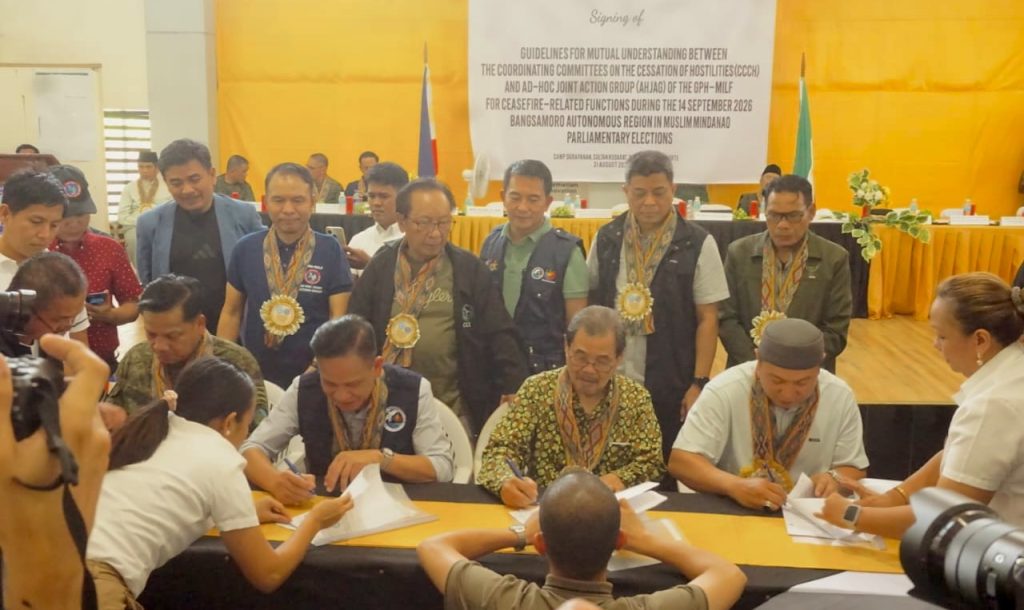




The Bangsamoro transition has reached a decisive juncture. Born of the peace agreement between the Philippine government and the Moro Islamic Liberation Front (MILF), the Bangsamoro Autonomous Region in Muslim Mindanao (BARMM) and its transition authority were established in 2019 to turn a negotiated settlement into durable institutions of self-government capable of delivering on peace dividends ahead of inaugural parliamentary elections.
Seven years and four postponed elections later, the BARMM will hold its first elections on 14 September 2026. The Bangsamoro’s first elected government inherits a defining question: has the transition delivered on the peace agreement and built the institutions needed for meaningful self-government?
We argue that the transition period has produced institutions, instruments and conditions characterised by dualities that simultaneously enable and constrain the ability to achieve this goal. Institutions for autonomy are established but have yet to fully deliver peace dividends. The MILF’s political conversion is almost complete, but the process has fractured its leadership and political party.
Meanwhile, the inaugural elections promise democratic consolidation, yet poor electoral readiness threatens the vote’s credibility. This pattern of dualities connects the transition’s achievements and gaps to the risks that are converging around the BARMM’s first elections. How these dynamics shift will depend on decisions made in the 18 months following the election. With senior leaders on either side of a factional divide within the MILF warning of a return to armed struggle, the stakes for the BARMM and the Philippines are incredibly high.
The peace dividend promise
The story of Bangsamoro autonomy is defined by decades of armed conflict, punctuated by cycles of ceasefires, peace agreements, breakdowns, and renewed negotiations. This is not the region’s first attempt at establishing an autonomous region. Indeed, the BARMM replaced the Autonomous Region in Muslim Mindanao (ARMM), which itself was the product of a peace agreement between the national government and the Moro National Liberation Front (MNLF).
The MILF’s negotiations with the national government, which began in the late-1990s, eventually culminated in the 2014 Comprehensive Agreement on the Bangsamoro (CAB) and, four years later, the Bangsamoro Organic Law (BOL) which gave the settlement institutional form.
The Bangsamoro Transition Authority (BTA) convened its inaugural session on 29 March 2019, opening seven years of MILF-led interim governance that closes once the 80-member parliament elected on September takes office to form a regular government. This election is the test of the CAB’s promise that a negotiated end to conflict would be repaid in meaningful autonomy, accountable institutions, tangible peace dividends, and genuine democratic participation. The transition should not be judged on whether institutions of self-government were built, but whether they delivered what was promised in exchange for peace.
Transition 2019–2026: autonomy, peace, democracy
At the end of the transition period, the BARMM’s political and strategic environment is defined by a precarious balance of significant progress and achievements alongside persistent and often intensifying vulnerabilities. Since 2019, the institutions and bureaucracy for autonomy and self-government have largely been established satisfying most of the core milestones of the peace agreement’s political/legal track.
Critical development benchmarks have also improved during this period, including solid economic growth—5% in 2025—that has been crucial for reducing poverty from 60.4% in 2018 to 32.4% in 2023. The national government’s Block Grant, an annual transfer of national tax revenues, and Special Development Fund, another annual allocation specifically to fund rehabilitation and development in critical areas, are the foundation stones of the BARMM’s economy, providing consistency and predictability through transition.
There has also been a concerted effort to enact inclusive legislation (e.g. a pluralistic tri-justice system consisting of the regular court, the shariah court and traditional court,) and diverse stakeholder representation in the BARMM government. Meanwhile, despite periods of tumult, the peace and ceasefire agreements have practically held, with no reported incidents of the kinds of violence that would constitute a ceasefire breakdown.
The transition’s most significant weaknesses tend to cluster around delivery rather than design. A progress assessment of delivery against the requirements outlined in the Comprehensive Agreement on the Bangsamoro, the Bangsamoro Organic Law, two iterations of the Chief Minister’s Enhanced 12-Point Priority Agenda (2023–2025) and two iterations of the Bangsamoro Development Plan (2020–22 and 2023–28) reveals that many milestones and objectives of the transition’s policy and administrative architecture remain unresolved, or enacted but yet to deliver.
For example, of the seven priority codes mandated by the BOL, the Bangsamoro Revenue Code is the only one still pending enactment. Despite the Block Grant and Special Development Fund delivering budget predictability and supporting measurable growth, chronic budget underspending when needs across the BARMM are so acute has undermined the BTA’s impact. Meanwhile, reliance on Manila’s coffers presents a clear risk that fiscal dependencies necessary for transition become permanent. More broadly, the BTA’s broader development agenda remains partially unmet. Many initiatives in the Chief Minister’s 12-point priority agenda and the Bangsamoro Development Plan are incomplete or underfunded.
This pattern of achievement and progress in one sense, being simultaneously made vulnerable in another, re-emerges time and again. International donor and national government engagement has been vital, enabling institutional reforms and carrying the peace process through periods of tension and pause. Yet, these same partnerships have at times reinforced elite capture and patronage relations.
The delivery of peace dividends shows the pattern most plainly. Aggregate growth and falling poverty conceal pockets of impoverished communities, typically in remote areas, that remain highly vulnerable to conflict and rebel recruitment. If visible benefits do not reach them, extremist groups can exploit the resulting grievances. Many civil society leaders and community stakeholders remain wary that autonomy has yet to significantly improve their lives and public patience with the transition, and with the autonomy project itself, is eroding. That disenchantment is felt most keenly amongst former MILF combatants left disgruntled by the peace process.
One of the major achievements of the peace process has been the MILF’s transformation from a revolutionary movement into an electoral political actor. That transformation, however, has fractured the movement it was meant to consolidate. The United Bangsamoro Justice Party (UBJP), founded by the MILF in 2014 and registered in 2015, remains its official electoral vehicle. This was affirmed in a 27 March 2026 memorandum by Chairman Murad Ebrahim declaring the UBJP as the MILF’s only official party. On 2 April 2026, senior MILF figures convened in Davao City for the Bangsamoro Federalist Party (BFP). By 30 May 2026, 1,934 members across several MILF Base Commands had joined the BFP. A third party, the Alliance of Bangsamoro Tri-People’s Party, has drawn support from the same ranks. The fragmentation of the MILF’s senior leadership is not just a political fracturing across different political parties but a test of whether the MILF’s political authority still binds its own commanders.
The splits at the top of the MILF have cascaded through its command and rank-and-file, representing a potential threat to post-election governance and the durability of the peace process. The MILF’s “temporary pause” in the peace talks—which remained in place from March to August 2026 due to the vacant chairmanship of the national government’s peace implementing panel—was a worrying signal that peace efforts may completely stall.
The state of the normalisation track, covering the decommissioning of former combatants, the transformation of six MILF camps, and a suite of other socioeconomic, trust building, and transitional justice efforts, is more concerning still. In July 2025, the MILF suspended the fourth and final phase of decommissioning for its remaining 14,000 combatants, until the national government fully complies with its parallel obligations such as the full delivery of socioeconomic benefits and the disbanding of private armed groups.
The joint peace and ceasefire mechanisms established to uphold peace and stability in local communities are among the transition’s great success stories. The Joint Peace and Security Teams (JPST), composed of personnel from the Armed Forces of the Philippines, the Philippine National Police, and the MILF, have strengthened confidence-building, secured decommissioning activities, and reduced localised violence in conflict-prone communities.
Augmenting these efforts, the Coordinating Committee on the Cessation of Hostilities (CCCH) and the Ad Hoc Joint Action Group (AHJAG) have institutionalized direct coordination between government security forces and the MILF, enabling the management of ceasefire violations, law enforcement operations, and threats posed by extremist and criminal groups without reigniting vertical conflict.
These bottom-up peace mechanisms will remain indispensable for sustaining peace, supporting democratic consolidation, and preserving stability beyond the transition period. While largely designed for vertical conflict, the mechanisms could be more deliberately used to manage horizontal violence (i.e. violence within and between local communities and armed groups), which is the region’s dominant security concern particularly during elections.
The election milestone & inflection point
The political landscape heading into the Bangsamoro’s inaugural elections is fractious and volatile. The MILF and its UBJP face internal divisions and active challenges by traditional clans, local politicians, and other political parties (e.g. Serbisyong Inklusibo-Alyansang Progresibo or SIAP), which have drawn high-profile MILF defectors. The MILF’s fragmentation, exacerbated by national government interventions and intra-MILF tensions, risk fuelling broader instability and clan feuds (rido).
Divisions amongst MILF commanders reflect strategic and cultural divides as those backing rival parties (such as BFP or SIAP) tend to hold strong local alliances and potentially a surer path to electoral victory. MILF commanders remaining with the UBJP are generally driven by deep loyalty (maratabat) to the MILF’s central leadership.
Three cleavages structure the emerging contest. The first runs through the MILF itself with the UBJP fielding chairman and former chief minister Ahod “Al-Haj Murad” Ebrahim against the incumbent interim Chief Minister Abdulraof “Sammy Gambar” Macacua. The rise of the Bangsamoro Federalist Party, formed in April 2026 and drawing on over a thousand members from two large MILF base commands, is emerging as the UBJP’s primary rival.
The MILF Central Committee indefinitely suspended Macacua in June 2026 as chief of staff of the front’s armed wing, citing decisions “inconsistent with the political line and collective decisions of the MILF leadership.” Then, in September 2026, Macacua was formally removed as Chief of Staff of the MILF’s Bangsamoro Islamic Armed Forces (BIAF) alongside 40 other BIAF officers. A movement that remained largely coherent during decades of armed struggle now approaches its founding election split between its two most senior figures.
The second cleavage pits the engineered party system against established political families. The Bangsamoro political landscape is shifting from the hegemony of the MILF and its UBJP to a considerably more diverse multiparty landscape. The most significant development has been the formation of a “Grand Coalition” joining together the respective parties of three powerful governors—Basilan’s Mujiv Hataman, Lanao del Sur’s Mamintal Adiong Jr, and Sultan Kudarat’s Suharto Mangudadatu—and a political base built on strong clan-based relations. The party-list seats that comprise a majority of the mixed-member Bangsamoro Parliament reward party-based organisation, but the parallel single-member district seats return the contest to the local arenas where clan power is strongest and clan politics remains the name of the game.
The third cleavage runs between Cotabato and Manila. Interventions by the national government—including the replacement of Ebrahim with Macacua as Chief Minister, the reconfiguration of the BTA cabinet, and the Supreme Court ruling excluding Sulu from the BARMM—has created vulnerabilities in how the Bangsamoro’s autonomy project is perceived. Autonomy that can be reorganised by presidential appointment has increasingly been seen as autonomy in name only.
The September election is therefore more than a governance milestone: it is the mechanism by which accountability is meant to shift from the national government to the BARMM government, and from appointment to election.
Beyond the political landscape, critical questions remain about the Bangsamoro’s electoral readiness. Of the 2,688 likely voters interviewed by IAG Research, 47.3% said they did not know how the parliamentary voting process works, and only about 3% claimed to understand each of its four components: the party seats, the district seats, the sectoral seats and the selection of the chief minister. Fewer than one in twenty voters, in other words, can explain the ballot on which the region’s first parliamentary election will be fought.
The profile of the likely electorate further complicates this picture. Women constitute 54.2% of likely voters and roughly a third are aged 17 to 29, yet 83.4% of households report monthly incomes below PHP9,100, and gender equality sits near the bottom of stated concerns, crowded out by food, livelihood and safety. The reserved sectoral seats for women, youth, indigenous peoples and settlers are real but numerically thin.
Taken together, these considerations raise questions about how meaningfully the election will translate institutional legitimacy into democratic legitimacy. Only a parliament that its constituents understand, elected, and can hold to account is the instrument through which the CAB’s promises are finally converted into tangible peace dividends.
From mandate to progress
Thanks to a grant from the Australian National University’s Philippines Institute, our research produced a series of interlocking assessments that considered the BARMM’s strategic environment, progress against key peace and autonomy benchmarks, converging strategic risks, and mapped policy options. Taken together, our findings point to a suite of priorities for Bangsamoro, national and international stakeholders that can significantly move the region closer to realising the goals of meaningful autonomy, accountable institutions, tangible peace dividends, and genuine democratic participation.
For the new Bangsamoro government, it is the economy, security, and democratic consolidation that should sit at the top of its agenda. The Bangsamoro Revenue Code should be a first-term legislative priority, accompanied by an interim revenue diversification plan to reduce fiscal dependence. Expanding and protecting the Bangsamoro’s role as the nation’s food bowl will require sustained funding to agribusiness and the halal industries, both to attract private investment and to strengthen resilience to climate and natural disasters.
The government should also enforce ancestral domain protections for non-Moro indigenous communities, particularly in disaster-prone and resource-contested areas where climate and conflict converge. This will be essential for not only protecting minority rights but strengthening social cohesion and security.
Democratic consolidation will require credible, third-party dispute-resolution mechanisms to address issues within the MILF and across political parties to ensure political competition and elections, not factional violence, resolve disputes. Above all, the new government must close the say–do gap between peace dividend promises and delivery. A public dashboard tracking government priorities against measurable outputs would provide a simple but powerful way to demonstrate continuity of intent and build public confidence through transparent and verifiable progress. These measures will be central to establishing the Bangsamoro as a durable model of meaningful autonomy and democratic governance.
The national government’s most important immediate task is to build on the recently rejuvenated peace talks with the MILF and convert renewed political momentum into durable progress. Three priorities are particularly urgent. First, strengthen senior-level MILF-national government coordination at the local-level. Regular mediation and deconfliction between the MILF and security sector at provincial and sub-provincial command levels will be essential to safeguard peace and ceasefire agreements locally.
Second, sustainably resource and expand the joint peace and ceasefire mechanisms (JPST, CCCH, and AHJAG) that have proven so effective in preventing and mitigating vertical violence. Additionally, when and where appropriate, these mechanisms could be deployed to address horizontal violence—particularly clan-based conflict—which remains the Bangsamoro’s primary security risk.
Third, problems in the normalisation track must be resolved. Both sides will need to compromise, but the immediate obligation rests with the national government to completely fulfil its obligations to those of the 26,145 former MILF combatants who have been decommissioned but have yet to receive their full suite of entitlements. Advancing normalisation will also require tangible progress on disarming private armed groups and stabilising conflict-affected areas.
A first test of a party-based electoral system
Bangsamoro is finally voting. What is it voting for?
The international donor community has a critical opportunity over the next 18 months to help consolidate the Bangsamoro’s transition. The inaugural elections provide a natural point to reset donor engagement and rethink how assistance reaches communities. A systematic review of aid and disbursement practices, undertaken with Bangsamoro civil society and academic institutions, should identify how resources can be channelled more directly to communities, reduce the risk of elite capture, and improve transparency and demonstrable impact at the local level.
This should form part of a broader investment in the Bangsamoro’s civil society and academic sectors. Civil society networks with demonstrated community-level peacebuilding capacity are particularly well-placed for greater investment. They offer a relatively low-cost, high impact means of strengthening social cohesion, grassroots resilience, and conflict prevention. Greater support for Bangsamoro’s academic institutions would similarly help generate the empirical and applied research needed to improve government policy and practice.
Finally, donor investments should prioritise integrated economic, infrastructure and connectivity projects, and, where appropriate, structure them as co-investments with Bangsamoro enterprises. Expanding physical and digital connectivity in underserved rural areas would connect farmers and fishers to markets while creating the conditions for growth in agribusiness and emerging halal industries.
Conclusion
The Bangsamoro transition showed that the institutions of autonomous governance can be built. What is less clear is whether those institutions can deliver comprehensively and consistently for the region’s constituents. The BARMM will soon have a new government with a democratic mandate and closing the gap between formal achievement and substantive delivery, particularly on revenue, normalisation, and peace dividend expectations, will determine whether autonomy, peace, and democracy consolidates or collapses.
The Bangsamoro government, national government, and international partners each have distinct responsibilities. The priorities we have outlined not only reflect those responsibilities but align with their core incentives. The 18 months following the inaugural elections will be the most critical period in the Bangsamoro’s history and have seismic repercussions for the Philippines’ future.
• • • • • • •
This article draws upon research funded by a grant from the Australian National University’s Philippines Institute.
• • • • • • •