 Facebook
 Twitter
 Soundcloud
 Youtube
 Rss
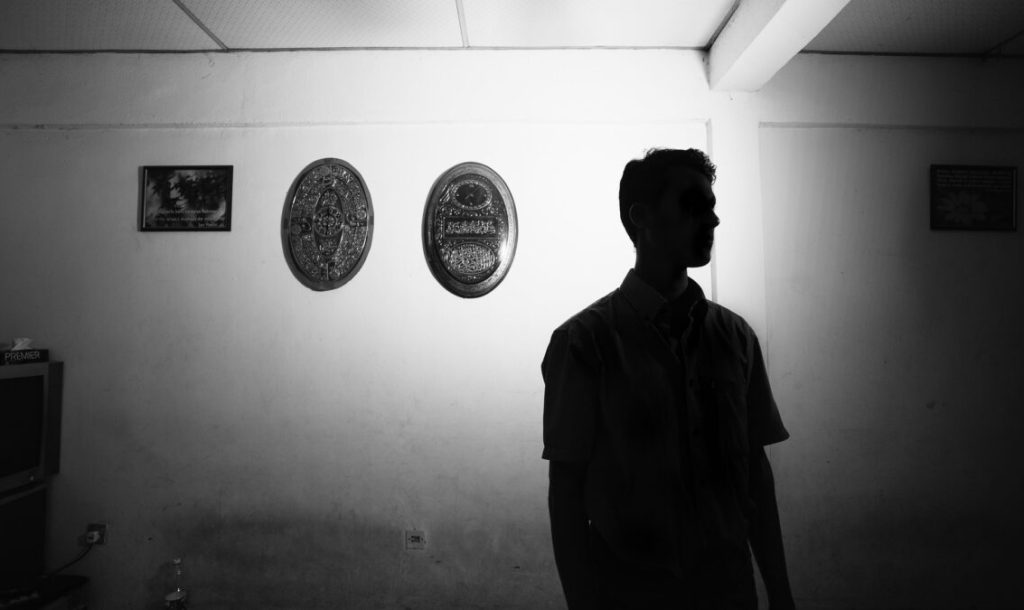




On 19 November, the International Court of Justice rules on whether Myanmar committed genocide against the Rohingya. Whatever the outcome, the weeks around its judgment will be perilous for Rohingya in Myanmar and in exile, as the kind of online hate that preceded the 2017 atrocities is gathering force again—while Facebook pulls back its already limited moderation and AI exacerbates the spread of false narratives.
Kelley Currie, the UN special rapporteur on Myanmar, highlighted the danger in late October, warning that she sees hate groups’ growing activity online as “a prelude to potential violence following the ICJ decision.” That danger now runs well beyond Myanmar, into the countries where many Rohingya have sought refuge—several of which have championed the case in The Hague and should now do more to protect the refugees they host.
Already turning violent
In October, in Johor, Malaysia, attackers lobbed Molotov cocktails at a Rohingya settlement after two Facebook clips went viral amid a months-long campaign of AI-generated videos pushed by bots and fake accounts. While the clips appeared to show Rohingya youths calling Malays cowards and challenging them to a street confrontation, one Rohingya man depicted says his photo was misused to produce them. Police believe the videos triggered the attack. Elsewhere, a content creator films himself mocking Rohingya to their faces, while vigilante groups stage and broadcast “targeted hunts” for refugees. And although Malaysia’s communications regulator has acted swiftly against other viral falsehoods, so far it has taken no comparable action against this campaign.
Malaysia is not the first. In December 2023, hundreds of young people in Banda Aceh, Indonesia, stormed a Rohingya shelter and forced 137 refugees onto trucks, delivering them to a government office to demand their deportation. UNHCR called it “the result of a coordinated online campaign of misinformation, disinformation and hate speech” involving AI-generated images spread by bot accounts.
Meanwhile, in India, the India Hate Lab documented 69 rallies and other gatherings in 2025 where speakers specifically targeted Rohingya refugees. Across all 1,318 hate speech events it tracked—where many speakers brand Muslims, including Rohingya, as infiltrators—videos of nearly every one were first shared or livestreamed on social media, three-quarters of them on Facebook.
The pattern inside Myanmar
In Myanmar, a fabricated video posted to Facebook in August cast Rohingya as part of a plot “to seize control of Arakan.” The page alleged the plot was cooked up by the Bangladesh government in collaboration with “Islamic extremist Bengali armed terrorist groups”—“Bengali” being the slur used to cast Rohingya as foreigners. Month after month, the Burma Human Rights Network (BHRN) documents posts like it, which routinely paint Rohingya as terrorists, “illegal Bengalis,” and parties to the war in Rakhine.
These posts continue despite the junta moving to treat such rhetoric as a liability. In January, for the first time in decades, it broadcast a notice urging supporters to avoid discriminatory language while the ICJ case remained before the Court. Days later, it nonetheless allowed a rare demonstration in Yangon where hundreds of monks and nationalists—led by successors to Ma Ba Tha, an ultranationalist Buddhist movement long accused of inciting hatred of Rohingya—rallied behind its legal team, with one speaker declaring, “There is no such thing as genocide.”
The junta’s already limited restraint is wearing even thinner as the ruling nears. On November 15, BHRN reported that Ma Ba Tha and other ultranationalist groups are preparing nationwide protests if the Court finds Myanmar responsible, with the Patriotic Myanmar Monks’ Union mobilizing supporters. Nationalists have also circulated demands on social media that Islamic organisations deny the Rohingya’s existence, threatening a nationwide boycott of Muslim-owned businesses if they refuse. Meanwhile, members of the junta have reportedly discussed renewed arrest operations targeting Rohingya, with a military-aligned lawmaker likening the proposed crackdown to the notoriously brutal 1978 Operation Dragon King.
Platforms pull back
In 2018, Mark Zuckerberg told the US Senate that Facebook needed to “ramp up our effort [in Myanmar] dramatically.” Asked by Senator Patrick Leahy whether the company would dedicate the resources to remove hate speech there within 24 hours—a commitment local civil society groups had been “begging for”—he replied, “Yes. We’re working on this.” I made the same case at the time, writing that addressing such dangerous hate speech “should be a matter of hours—not days or weeks.”
The treatment of refugees in Indonesia sees a serious setback
Will Pekanbaru become Indonesia’s Cox’s Bazar?
Then, in January 2025, Meta reversed course. Saying that the US elections felt like “a cultural tipping point” toward prioritising free speech, Zuckerberg loosened its hate speech rules and pulled back automated enforcement against all but the most egregious violations, conceding that it was “going to catch less bad stuff.” Its global removals for violence and incitement fell from 11.5 million in the second half of 2024 to 1.4 million a year later. And this year, Human Rights Myanmar found more than half of the hate posts it tracked on Facebook targeted Rohingya—and when it reported posts still up after a month, Facebook took a median of four days to respond and removed only three of 100.
Much of the hate has also moved beyond Facebook, to Telegram and TikTok, where enforcement remains even weaker. Indeed, Telegram hosted the largest share of the hate speech BHRN documented in 2025, and nine of the ten Ma Ba Tha offshoots it identified have TikTok accounts. Users also adapt: in Malaysia, a new slur that was reportedly coined to evade moderation—“Roro”—has caught on, spreading to podcasts and political commentary.
What governments must do
The weeks around the ruling thus call for a heightened level of vigilance that cannot be left to the platforms’ goodwill. Although The Gambia has asked the Court to order Myanmar to suppress “direct and public incitement to commit genocide,” such an order would reach neither the platforms nor much of today’s hate, which spans borders. US courts also cannot be expected to force Meta’s hand, at least for now. In April, a federal appeals court threw out a US$150 billion lawsuit brought by Rohingya refugees, ruling that Section 230 shields platforms from liability for users’ posts—even when, as the plaintiffs argued, Facebook’s algorithms amplified that content.
That leaves it to governments with leverage over Meta and other platforms, starting with those that host Rohingya refugees. In Malaysia, the new Online Safety Act lets the regulator, the Malaysian Communications and Multimedia Commission (MCMC), compel platforms to act. The MCMC used this power in May, ordering TikTok to explain why it had failed to block AI-generated videos and manipulated images about the king—content it called “grossly offensive, false, menacing and insulting.” It also demonstrated how quickly it can act in February, when within a day it flagged some 50 fake accounts across Facebook and TikTok that had recast a land dispute as an attack by an “Indian gangster” on a Malay landowner.
These actions stand in stark contrast to its treatment of the AI-generated campaign against Rohingya, which, despite engendering real-world violence, has drawn no comparable response. Although Islamic organisations have demanded action and rights groups have raised the alarm, the regulator has so far said nothing publicly. Before the ruling, it should turn the same scrutiny on the networks behind the campaign.
Malaysia is the clearest case, but not the only one. The Organisation of Islamic Cooperation (OIC) tasked The Gambia with bringing this case and reaffirmed its “unwavering support” in October. Its members include Malaysia, Indonesia, and Bangladesh—all hosts to Rohingya refugees. Those governments should match their support in The Hague with action at home by empowering regulators to go after the coordinated networks behind these campaigns, and their leaders should speak out against the hate: even Myanmar’s junta, citing the case, told its supporters to avoid discriminatory language. As Kyaw Win of BHRN has argued, the ruling will test the OIC’s promises.
The treatment of refugees in Indonesia sees a serious setback
Will Pekanbaru become Indonesia’s Cox’s Bazar?
Perhaps most relevantly, after the 2024 Southport stabbings—when false claims about the attacker fuelled riots across the UK—the Board found that Meta deployed these measures “too late,” nearly a week after the violence began. This time, intervening states should insist that Meta switch them on before the ruling rather than after violence follows it, and move quickly against coordinated networks and the AI-generated content they push.
The UK in particular, which leads on Myanmar at the Security Council and intervened in the ICJ case, is well positioned to act. It already makes platforms tackle incitement and racial and religious hate at home under its Online Safety Act, and should insist that Meta protect Rohingya to the same standard.
Other gaps in protection will take longer to close. The intervening states and governments in the region should fund independent monitors who can flag dangerous content early, and press platforms to give them the data access to do so. They should also pressure platforms to add moderators in Burmese, Malay, and other languages the hate travels in, as Facebook first promised to do in Myanmar in 2018. None of this will be in place by November 19.
In September, a Rohingya activist in Malaysia told Al Jazeera that many in the community were “very afraid to go outside and to be recognised as a Rohingya.” The ICJ’s ruling should not give them further reason to be.