 Facebook
 Twitter
 Soundcloud
 Youtube
 Rss
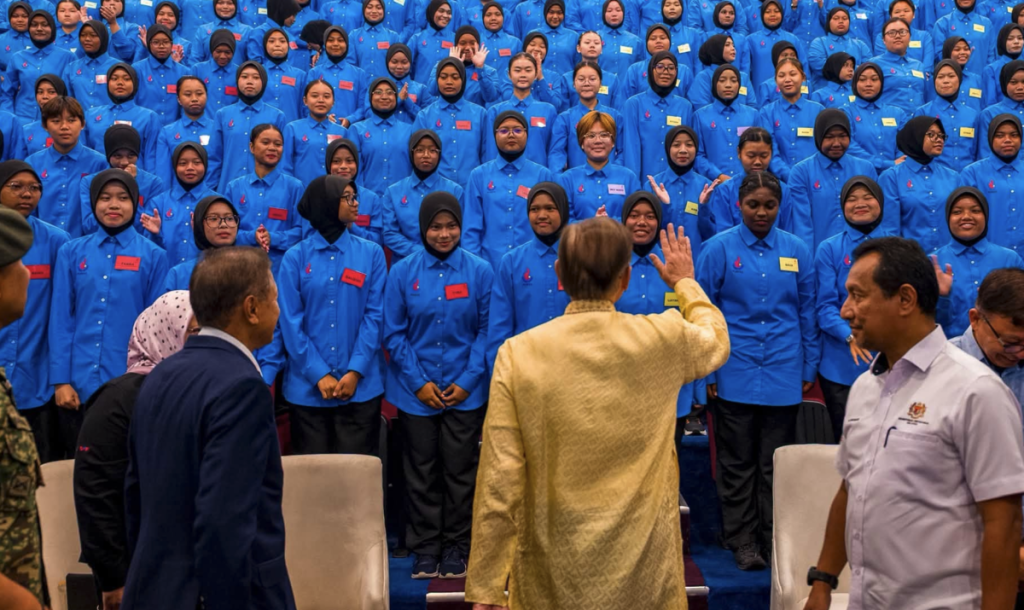




On the night of 9 May 2018, many Malaysians stayed up well past midnight to watch something they had never seen. The Barisan Nasional (BN) coalition that had governed the country since its independence in 1957 was losing power. Mahathir Mohamad, who contested the election under the People’s Justice Party (PKR) logo founded by his former protégé turned nemesis Anwar Ibrahim, was sworn in as Malaysia’s seventh prime minister a day later, becoming the world’s oldest elected leader at 92 years old.
Eight years have passed since that historic election, which was said to herald the birth of “Malaysia Baharu” (New Malaysia), Malaysia is on its way to the next general election (GE16), which is due by early 2028 but may come sooner. BN is back in power as part of the “Unity Government” formed by the man it once jailed, Anwar, who finally became prime minister 29 years after he was appointed as Mahathir’s deputy in 1993.
In the interval period between 2018 and 2026, Malaysia has had four prime ministers, its first hung parliament and a first post-election coalition government comprising parties who bitterly contested against each other.
How did Malaysia get from that night to here, what has changed (or remained the same), and what is at stake when Malaysians go to the polls again? These are the questions behind a new series of commentaries from the Malaysia Institute at the Australian National University, which will be published by New Mandala over the coming months. As guest editors for this series, we are excited to feature early and mid-career researchers, journalists and practitioners in the series who will write on a variety of topics. But first, let’s contextualise key developments and thematic issues.
A country learning to live with fragmentation of power
For most of its history, Malaysia was governed through a familiar power-sharing formula between ethnic parties representing the major ethnic groups within BN’s consociational framework. It held regular elections and usually won them handsomely.
The 2018 election result put an end to BN rule, but struggled with what came after the fall. The coalition that won, Pakatan Harapan (PH), lasted 22 months before defections (driven by internal politics and ethnic anxieties) brought it down in February 2020. Two more prime ministers followed in quick succession. By the 2022 election, no coalition could win a majority on its own. After days of deadlock, the Yang-dipertuan Agong (King) called for a unity government, and Anwar, whose sacking and imprisonment in 1998 had launched the Reformasi protest movement, was sworn in at the head of a government that included both PH and BN plus the governing parties of Sarawak and Sabah.
That is the big picture this series starts from. The old certainties, and the familiar formulas for sharing power, have gone, but political actors have struggled to fill the vacuum. Malaysians have not agreed on what to make of these new political realities. To some, especially civil society groups and supporters of liberal democracy, the post-2018 years herald the arrival of multiparty competition, messy but healthy competition. To many others, it looks like instability and some even speak fondly of the years before 2018, and of Najib Razak, the disgraced former prime minister imprisoned over the 1MDB scandal. Many hoped for a thorough reform and overhaul of old systems and structures, yet change also unsettles others.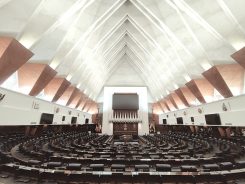
Conservative segments of the Malay community, the majority ethnic group, also cast concerns over the fragmentation of Malay political power into several distinct parties. This has led to growing calls and manoeuvring towards a “Malay unity” agenda. Will historians then look back on the years after 2018 as the moment Malaysian democracy came of age, or as something closer to a Weimar Republic, a fragile democratic interlude that opened the door to something harsher?
Why Malaysia is worth watching
Can a multiethnic, Muslim-majority democracy that sits in the middle of US–China rivalry and global supply chains turn a promise of reform into lasting institutions? Why should readers in Australia, or anywhere outside Malaysia, follow what happens there? It is not just that the two countries have longstanding ties in defence, trade, security, cultural exchange, but Malaysia’s importance goes further: it is a hedging middle power, positioned between East Asia, the Middle East and the West, and a hybrid electoral democracy whose choices carry weight well beyond its borders.
For readers interested in international affairs, Anwar’s foreign policy has been a balancing act between Washington, Beijing and the Muslim world, and it draws criticism at home from several directions. He has skipped the UN General Assembly, put Malaysia forward for BRICS, and set off a diplomatic row by siding with China on Taiwan. He also received Myanmar’s junta leader for talks on refugee repatriation, over the objections of human rights groups. Some of this may reflect disillusionment. Anwar was long seen as a friend of the West, and the war in Gaza, which he has called genocide, seems to have flipped a switch in his leanings.
Malaysia is also one of the few Muslim-majority democracies where power has changed hands peacefully at the ballot box. Tunisia held the promise of democratic transition after the Arab Spring and even won the Nobel Peace Prize, but it has since slid back into authoritarian rule. Malaysia’s transition is unfinished, but it still carries promise of consolidation. Its 2018 turnover was the most significant in Southeast Asia since Indonesia’s after 1998, and Indonesia itself is now showing signs of backsliding. That alone makes Malaysia worth watching.
At home, riding on a reformist image, Anwar’s Madani government has delivered a few of its promised procedural reforms over the past couple of years (see table 1 below).
Table 1: Major Reforms in Malaysia, 2018-2026
| Reform | Area | Year | Status |
| Mahathir (PH) · May 2018–Feb 2020 | |||
| GIACC and National Anti-Corruption Plan | Anti-corruption | 2018–19 | Implemented |
| Establishment of functional select committees | Parliament | 2018 | Implemented |
| Undi18 and automatic voter registration | Electoral | 2019 | Passed |
| Repeal of Anti-Fake News Act | Expression | 2019 | Enacted |
| Restoring Sabah and Sarawak status (Art 1(2)) | Federal–state | 2019 | Failed |
| Muhyiddin (PN) · Mar 2020–Aug 2021 | |||
| No reform. Parliament suspended amid emergency declaration under pretext of Covid-19 pandemic | Rollback | 2021 | Lifted Aug 2021 |
| Ismail Sabri · Aug 2021–Nov 2022 | |||
| Government–opposition MOU (MP allocations, opposition leader status) | Parliament | 2021 | Partly implemented |
| MA63 constitutional amendment | Federal–state | 2021 | Enacted |
| Undi18 and auto-registration take effect | Electoral | 2021 | Implemented |
| Anti-party-hopping law (Art 49A) | Electoral | 2022 | Enacted |
| Anwar (Unity Government) · Nov 2022–present | |||
| Abolition of mandatory death penalty | Criminal justice | 2023 | Enacted |
| Public Finance and Fiscal Responsibility Act | Fiscal | 2023 | Enacted |
| Audit Act amendment (“follow the public money”) | Public finance | 2024 | Enacted |
| National Anti-Corruption Strategy 2024–28 | Anti-corruption | 2024 | Implementing |
| Targeted diesel subsidy | Fiscal | 2024 | Implemented |
| New civil service pay system (SSPA) | Civil service | 2024 | Implemented |
| Citizenship rights for overseas-born children of Malaysian mothers | Citizenship | 2024 | Passed, not in force |
| Parliamentary Services Act | Parliament | 2025 | In force Oct 2026 |
| Malaysian Media Council Act | Media | 2025 | Enacted |
| Whistleblower Protection amendment | Anti-corruption | 2025 | Enacted |
| Government Procurement Act | Public finance | 2025 | Passed; enforcement 2027 |
| Sabah 40% revenue entitlement | Federal–state | 2025–26 | Unresolved |
| PM 10-year term limit | Executive | 2026 | Table but failed to pass (146 of 148 votes) |
| Separation of AG and Public Prosecutor | Prosecution | 2026 | Pending |
| Freedom of Information Bill | Transparency | 2026 | At select committee |
| Ombudsman Bill | Administrative justice | — | Not tabled |
| Political financing law | Electoral | — | Not adopted yet |
| Equal constituency funding for all MPs | Parliament | — | Not adopted yet |
However, big structural changes that gave “Malaysia Baharu” its meaning remain largely promises, which Anwar says require compromise with his coalition partners. The continued use of repressive laws, the dropping of corruption cases, the partial pardon of Najib Razak, among other things, have drawn persistent criticism of his reform credentials, costing a split within his own party and heavy losses in several state elections.
Will Anwar’s Madani government prove a one-term experiment, swept out in GE16? Will BN and UMNO return to power? These predictions matter, but it is just as important to assess the changes and the current situation, so we know what to look out for in GE16.
Five questions for GE16
We asked our contributors to look back over the years since 2018 and tell us what has changed in their corner of Malaysian public life. Read together, their pieces circle around a handful of big questions.
- How are governments made now? When no one wins outright, deals made after the vote decide who governs. Coalitions that were rivals at one election become partners at the next, and partners in Kuala Lumpur can be rivals at the state or regional levels. A piece on coalition politics, with its loop of betrayals and reconciliations, follows these shifting alliances and asks what they could mean for a voter trying to choose between “lesser evils”. Our series opens here.
- Who speaks for the Malay ethnic majority? For decades the answer was UMNO. Since 2018, Malay voters have split between UMNO, the Islamist party PAS, the breakaway Bersatu and Anwar’s multiethnic PKR. In the 2022 election PAS won more seats than any other single party. Now UMNO is resurgent while others are fracturing. Since Malay-majority seats decide who governs, this is the most important contest in Malaysian politics.
- Who has been emboldened, or tested? In Malaysia’s constitutional monarchy, the Yang di-Pertuan Agong (King) is the head of state, but real governing power rests with the Prime Minister and Cabinet, whom the King generally must follow under the Federal Constitution. Uniquely, the King is elected every five years by the Conference of Rulers from among the nine Malay state Rulers, in a rotating arrangement. But something has shifted in recent years. Since the 2020 political crisis, the palace has been asked to decide who commands a majority in Parliament (and they have exercised discretion), and it has also issued controversial high-profile pardons, including to former prime minister Najib Razak, convicted over the 1MDB scandal. The courts have been tested just as hard. Two pieces look at the monarchy and the judiciary. Their independence and their place in politics are among the most sensitive subjects in the country.
- What does it cost to win power? Patronage has long greased Malaysian politics, and the cost of politics are spiraling out of control—in part due to an absence of regulation on political financing or campaign financing. Our writers examine money politics, and why reform keeps stalling even under a government elected partly on an anti-corruption platform.
- Who is still at the margins? Women hold only around 13% of seats in the Dewan Rakyat, Malaysia’s lower house, and reforms affecting them have moved slowly. Young people became a powerful bloc almost overnight when the voting age fell, yet parties are still working out how to reach them, and civil society activists are still working out how to organise them. Ethnic minorities and Borneo (Sarawak and Sabah), long sidelined but have gained immense leverage given the political fragmentation in Peninsular Malaysia, are also pondering their agency and allegiances. Our writers probe how these groups have affected, or have been affected by, recent developments.
Of course, these are not the only questions that matter. Although we have asked contributors to carry different threads through their own pieces where they can, there will be gaps in the series given the limited run. Far from a “definitive” list of topics, what this series can do is to serve up appetisers to whet the appetite of readers and writers alike and hope others will fill the gaps or continue the conversation along.
Looking ahead
The general election can take place between anytime now and February 2028, depending on how long Anwar can hold his Unity Government together. There have been, and will be, a series of state elections leading up to GE16, including the Sarawak election that is coming up, thus in reality, the country is already in election mode.
Would the “new normal” of fragmented politics persist after GE16, or would it return the old order of one dominant coalition?Our contributors take up the question from different angles, and they will not always agree. Analysts are neither prophets nor pundits. They were asked to write on a topic they care about and to point to directions, patterns, and contestations. Except for imposing some rigor and standards, the writers are given almost free rein.
We are glad to have them with us as Malaysia heads toward its next election. Selamat membaca. Happy reading.